
Key takeaways
- Paris Fashion Week confirmed what the industry has been waiting to see: the wave of new creative directors that shook up the houses over the past two years is finding its footing.
- The business of fashion was never far from the conversation. Piccioli won the critics at Balenciaga and reportedly missed the sales targets. Valentino returned to Paris with shareholder-backed debt still on the table. The shows were spectacular, but the numbers behind them, less so.
- From avant garde newcomers to the grand houses closing the week, this Paris Fashion Week had something for everyone.
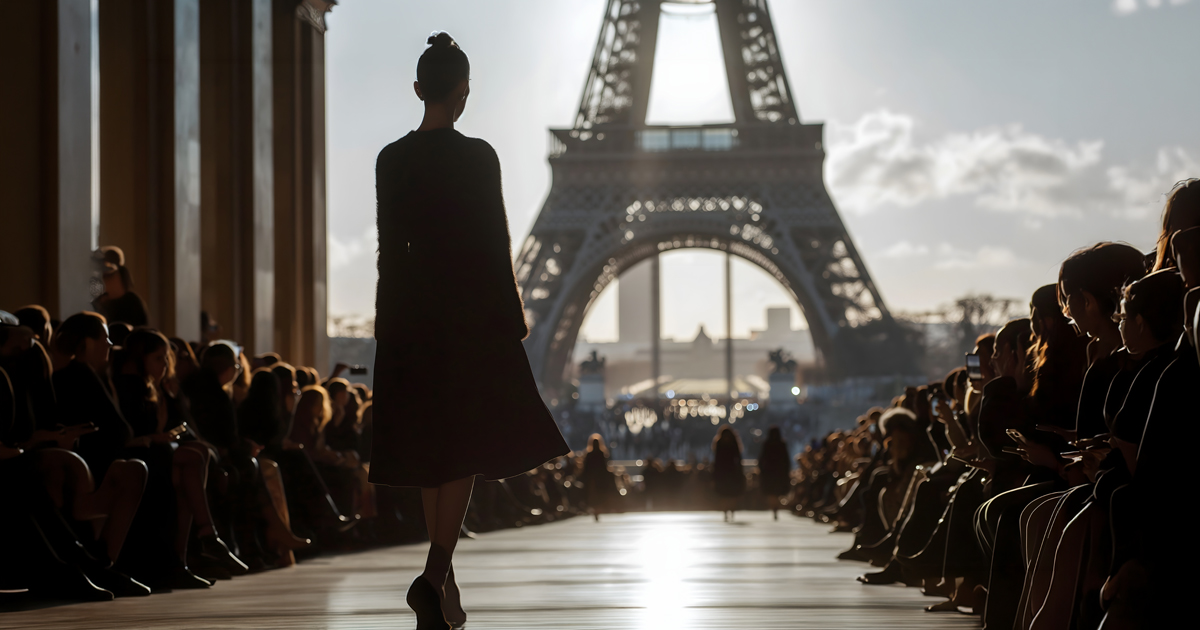
Paris has always been the final, the most anticipated and, frankly, the most cinematic week in fashion month. And this September, Paris Fashion Week SS27 has delivered spectacle, strong collections, inspiration, and no shortage of emotion, right from the very first shows.
The wave of new creative directors that shook up the news cycle a few seasons ago — Jonathan Anderson at Dior, Matthieu Blazy at Chanel, Pierpaolo Piccioli at Balenciaga, Michael Rider at Celine — has had time to find its footing. Generally speaking, this is exactly the point where the novelty wears off, and precisely when things get serious. These designers have become fluent in their houses by now, and the industry has been watching closely to see what they do with that.
The program was full. Valentino with Alessandro Michele at the helm, returned to Paris. Maison Margiela came back after a season in Shanghai. Sacai and Christopher Esber rejoined the official calendar. Drew Henry at Courrèges and Kai Nesselrath at Carven were the debuts everyone was talking about. As it turns out, Paris always sizzles.
Paris, already at its best
Matières Fécales went onto everyone’s radar once Zendaya walked the red carpet in a look straight from their latest catwalk. They are now big enough to have Rihanna on the front row — who had the entire show and room wait 63 minutes for her arrival. The collection didn’t shy away from the avant garde yet remained poetic and deliberate. Where many established labels are struggling to reach people, Matières Fécales are making a case for a different kind of luxury, one built on inclusion rather than gatekeeping. For what it’s worth: wholesale orders tripled after their last show.
Amid rumors swirling that Anthony Vaccarello will probably leave Saint Laurent after ten successful years, many saw this — undoubtedly powerful — show as his swan song. Gold was everywhere and its use was almost obsessive and “hypnotic” as Vaccarello himself described it. Midi skirts, safari jackets, fitted trench coats, cap-sleeve dresses, sheer lace. All of them gold. The collection unfurled as one continuous, molten thing: patinated, iridescent, absorbed into leather, caught in strappy sandals and oversized jewelry. An homage to Yves Saint Laurent himself.
At Dior, Jonathan Anderson worked almost entirely in lightness: sheer fabrics pleated into form, bows with long trailing ends, finely worked hems that moved with the models. The harder edge came through metallic snakeskin trousers in silver and green, cut wide and paired with double-breasted blazers. More mature than his previous seasons at the house, the collection was more romantic and subtle in its meaning, but always well-crafted and artful. My favorite: the midi-length skirt with an asymmetric, fringed edge.
Glenn Martens built the latest Maison Margiela offering around a central duality: hard against soft. Floral prints ran throughout, but so did rigorous construction: structured busts that opened and flared, jacket lapels that curved outward, surfaces treated in resin then unpleated so the rigid exterior fractured to expose the fluid fabric underneath. More romantic than expected, but with the distinct alternative edge that makes Margiela stand out.
Shows that got people talking
At Dries Van Noten, the SS27 fashion collection was an interesting mix ‘n’ match; pieces that work in whatever combination you put them in. Julian Klausner had fun with glamour this season, imagining it as something offhand rather than deliberate. Powdery hues, gradient prints, layered beads, a khaki coat with the sleeves rolled up. Klausner is a worthy continuator of Dries’ legacy.
Haider Ackermann is one of the most cerebral designers working today, and it remains a shame that his namesake brand was declared bankrupt in November 2021. At Tom Ford, he is working out what the house means now, in the post-Tom era. The SS27 answer was clean, audacious, faintly decadent and carried something of the brand’s 1990s edge: racy swimsuits, silk robes, sharply tailored jackets worn with nothing underneath.
Drew Henry’s debut at Courrèges went back to the brand’s 1960s origins. Logos appeared as jewelry and die-cut details on collars and pockets. The palette was loud: orange, red, canary yellow, chartreuse, grass green, baby blue. The silhouette was roomy. A clear, considered reset.
And, then, we had Balenciaga. The collection was the work of a designer thinking carefully about how clothes are made and worn, about lightness, comfort, function. It was also fresh and unencumbered by the weight of what the house used to be. Multiple industry sources have reported that Pierpaolo Piccioli was set to leave Balenciaga after the October 1 show — with neither the brand nor Kering officially confirming anything. That would be a shame. His shift away from Demna’s streetwear-heavy identity toward something closer to couture elegance has won over critics, but unfortunately largely left commercial targets unmet, which in the current climate is apparently enough.
Alessandro Michele called the Valentino show “Antibiblioteca” and asked guests to bring a book for donation. The collection was nostalgic, slightly unhinged and totally maximalist. The show came as Valentino’s shareholders —Mayhoola and Kering — committed additional financial support for 2026 after the brand’s debt increased.
At Celine, Michael Rider’s latest collection was fresh, unfussy, chic and genuinely wearable: a shoelace-thin belt on a voluminous coat, a silver XXXL bangle against a slim gown. Nearly two years in, Rider is quietly blending Celine’s Parisian legacy with his own American instincts into something that feels entirely coherent and entirely his own.
The finale
At the Grand Palais, Matthieu Blazy presented one of the most anticipated shows of Paris Fashion Week SS27 with almost 100 birds suspended above the runway, a giant moon overhead and Nicole Kidman and Dua Lipa dancing in their seats before the first look appeared. The collection moved through Gabrielle Chanel’s life almost chronologically: from the sheer silk knit she wore before she was Chanel, to a new smocked tweed built to move with the body. The central metaphor was freedom. The birdcage minaudière that closed the show was empty, its birds already gone. One year in, Blazy looks like he has found his direction.
The week ended, as customary, with the Louis Vuitton show. Nicolas Ghesquière worked with climate in mind, using fabrics that feel like a second skin, creating a minimalist, functional collection with weightless, fluid fabrics and a palette reminiscent of an airport runway in grey, silver and yellow. The accessory of the season according to the designer: loafers.


