
Key Takeaways
• BNPL is the 5th most-used payment method globally, with a gross merchandise value of $433 billion in 2022 forecast to reach $960 billion by 2028. The GCC, where e-commerce is growing at nearly double the global rate, is one of its fastest-moving markets.
• The commercial case for retailers is direct: BNPL drives 30–50% higher average order values, 15% better online conversion rates, and a 50% increase in repeat purchase rates, while cutting customer acquisition costs by up to 25%.
• With credit card penetration at just 21% across KSA and UAE, BNPL has already exceeded credit cards at 31% penetration, and a $42 billion opportunity by 2026 hinges on continued collaboration between regulators, businesses, and BNPL providers.
Alternative Payment Methods have become the cornerstone of global payments, with BNPL (Buy Now Pay Later) emerging as a standout choice. This global phenomenon has experienced meteoric growth since its inception, thanks to remarkable performance in mature markets.
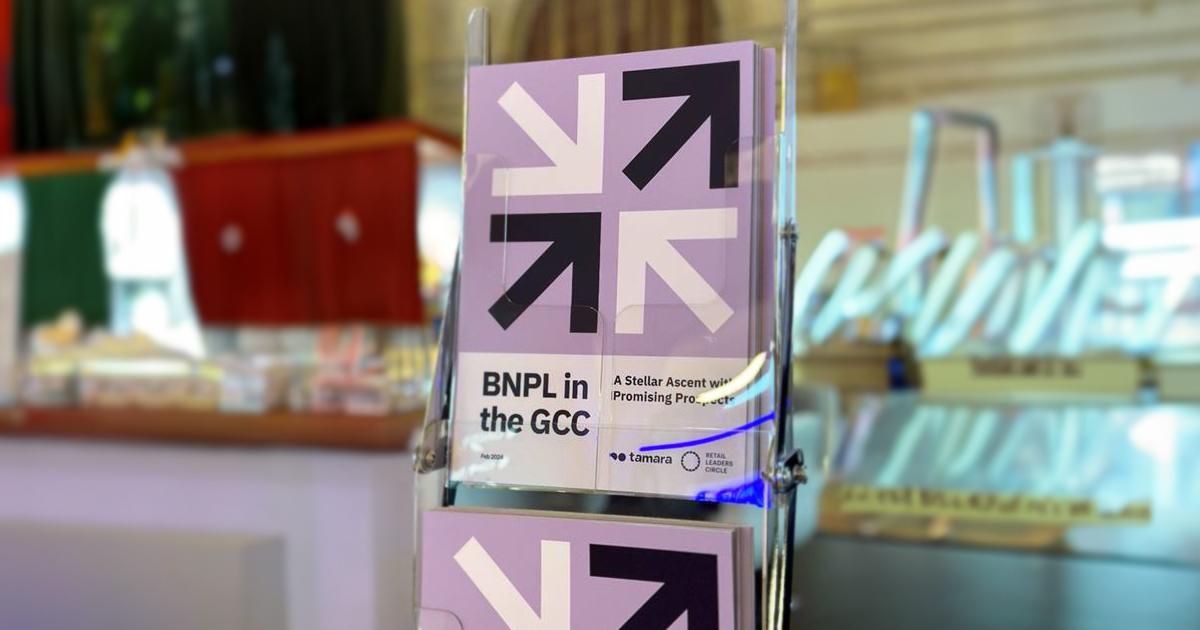
During the 10th Retail Leaders Circle MENA Summit, Tamara, the leading fintech platform to shop, pay and bank in Saudi Arabia and the wider GCC region, released the white paper, “BNPL in the GCC: A Stellar Ascent with Promising Prospects” created in collaboration with Retail Leaders Circle.
The white paper explores BNPL’s formidable presence in the retail space of the GCC, backed with phenomenal customer and business adoption. The triumph of BNPL is accentuated in the GCC, propelled by faster e-commerce growth versus global averages and promising market penetration prospects.
BNPL: A global phenomenon taking the GCC by storm
Alternative Payment Methods (APMs) have firmly established their dominance in global payments, constituting 66% and 35% shares of e-commerce and point-of-sale transaction values respectively in 2022, and displaying promising growth. Notably, Buy Now Pay Later stands out as the 5th most-used B2C payment method in 2022, both online and offline, with an estimated global gross merchandise value of $433 billion — forecast to reach $960 billion by 2028. This global phenomenon has experienced meteoric growth since its inception, thanks to remarkable performance in mature markets, where BNPL’s share of e-commerce has reached as high as 24% in Sweden and 23% in Germany. With BNPL’s robust customer demand expected to grow by 20% year over year — from 360 million users in 2022 to 900 million by 2027 — an increasing number of startups and established payment players are venturing into the space.
The triumph of BNPL is pronounced in the GCC, fueled by faster e-commerce growth compared to global averages — a 33% CAGR since 2019 versus 17% globally — and favorable market penetration prospects. Investors are taking note, with MENA fintechs raising a record $1.3 billion in equity funding in 2022. Customers are rapidly adopting BNPL, with close to 50% of shoppers in Saudi Arabia and the UAE having used it at least once. In parallel, over 40,000 businesses, including major category leaders and retail groups, have enabled BNPL in response.
The win-win dynamics of BNPL for businesses and customers
Buy Now Pay Later has not only transformed the way consumers shop and pay but has also presented a myriad of advantages for businesses, creating a positive, self-reinforcing flywheel effect. For customers, BNPL offers a cheaper, faster, and more flexible alternative to traditional credit, rooted in its customer-centric principles. New users can sign up and receive instant approval in under two minutes, with no lengthy application process or high annual percentage rates. While Millennials and Gen Z were early champions of the model — constituting over 80% of users in 2018 — Baby Boomers and Gen X have since emerged as the fastest-growing segments, at 39% and 26% CAGR respectively. For businesses, the potential for revenue growth and cost optimization outweighs the price tag.
On the revenue side, retailers integrating BNPL have recorded average order value uplifts of 30–50%, a 15% improvement in online conversion rates, and a roughly 50% increase in annual customer repeat purchase rates. New customer acquisition improves in parallel, with 10–12% of a retailer’s online BNPL gross merchandise value typically originating from BNPL directory traffic. Marketing returns are equally direct, with businesses reporting 10–15x ROI on spend placed through BNPL platforms. On the cost side, BNPL has driven Cash on Delivery orders down by 35–50%, reduced refund costs by 10–20%, and lowered customer acquisition costs by up to 25%.
Massive value remains to be unlocked
Even more turbocharged in the GCC, BNPL’s global success is neither coincidental nor short-lived. The GCC retail market is on track to exceed $427 billion by 2026 at a 6% CAGR, with e-commerce contributing 17% of that figure. Yet offline retail continues to dominate, at 11 times the size of e-commerce in KSA and UAE alone.
It is here to stay, driving financial inclusion and stimulating the economy. The region’s credit gap is a key driver: combined credit card penetration in Saudi Arabia and the UAE sits at just 21% of the adult population, two to three times below developed market benchmarks. In KSA, credit cards account for only 5% of transaction volumes. BNPL has already moved into that gap. In fact, penetration across KSA and UAE stands at 31%, exceeding credit card prevalence by 10 percentage points in just a few years. The monthly active user base, currently at 3–4 million, is projected to reach 10–14 million as providers expand toward a super-app model.
Underpinned by fundamental customer needs, macroeconomic drivers, and alignment with government agendas, BNPL holds the key to unlocking a massive USD 42 billion opportunity in the GCC by 2026. Saudi Arabia’s Central Bank issued dedicated Rules for Regulating BNPL Companies in December 2023, with the UAE Central Bank following shortly after, placing both among the few markets globally with formal BNPL regulation in place. Realizing the economic prospects associated with this opportunity demands trilateral collaboration between regulators, businesses, and BNPL providers.
Download the white paper and discover the underlying forces propelling the success of BNPL in the region, showcasing a promising outlook.


