
Key takeaways
- Gucci’s luxury price cuts — up to 30% on selected products across Europe, the US and China — are the visible outcome of a strategy Kering CEO Luca De Meo had already signaled months earlier, following thirteen consecutive quarters of declining sales.
- The aspirational consumer, who makes up more than half of Gucci and Louis Vuitton’s core customer base according to Bernstein, was priced out through years of aggressive increases that pushed entry-level bags past the threshold of attainability.
- Gucci’s decline is the most severe in the sector, but it is not an isolated one. Burberry fell into the red and lost its FTSE 100 status. LVMH’s fashion and leather division declined 5% in 2025. The industry’s bet on ultra-wealthy clients to offset aspirational volume did not hold, in sufficient numbers, for anyone.
- A price cut removes one reason not to buy. It does not rebuild desire. After years of price hikes that were not always matched by product quality or creative distinction, brands face a credibility problem that no markdown alone can solve.
For most of us who do not have a personal banker managing our discretionary budget, a Prada bag or a pair of Gucci boots has always been considered a luxury, albeit an attainable one. In fact, according to Bernstein research cited by The Wall Street Journal, Gucci and Louis Vuitton’s core customer — the middle-class consumer who sustains both brands’ volumes — spends roughly $2,000 to $3,000 a year on occasional treats like a handbag or a piece of jewelry.
When I bought my first Chanel bag in 2001, it cost under $2,000, and by 2010 it went for $2,850. That same bag now costs $11,700 — a 310% increase since 2010, roughly seven times the pace of cumulative inflation, and a price tag that is genuinely hard to justify. The luxury industry has spent, however, the better part of a decade pretending otherwise, and in the process, aggressively pricing out the very consumer who made these brands desirable in the first place. But is change on the horizon?
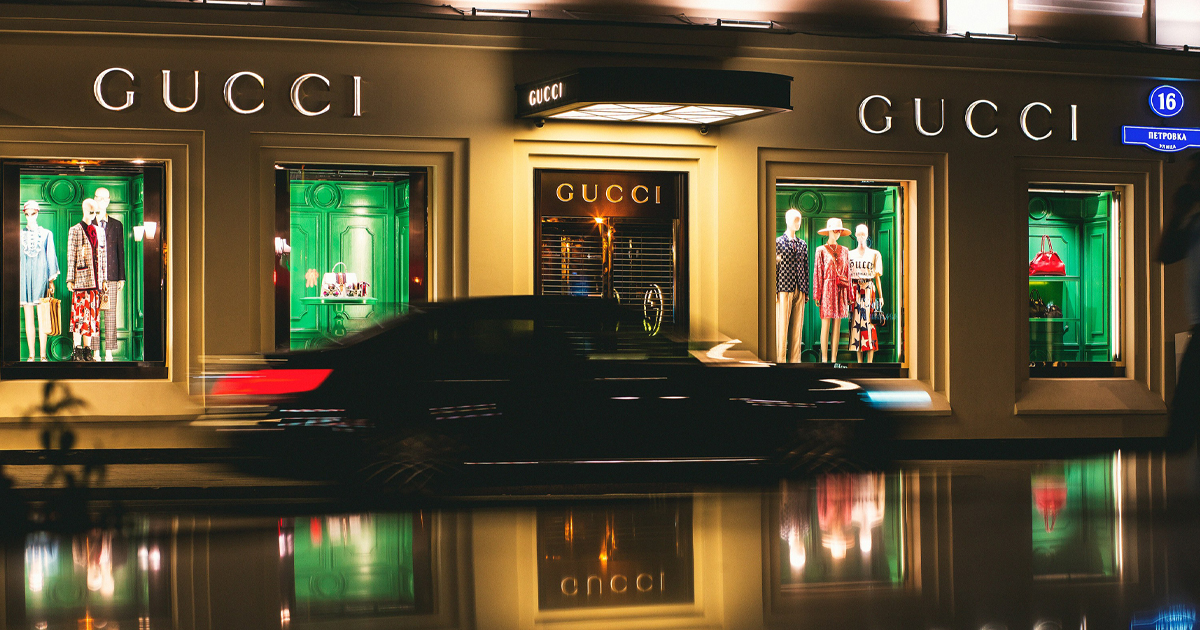
Over the course of this past summer, luxury price cuts began appearing across Gucci’s product range, with reductions of up to 30% on selected bags, sneakers, and ready-to-wear in Europe, the US and China. LVMH is reportedly weighing similar moves. Will others follow suit?
The price of getting it wrong
This price drop did not happen in a vacuum. Gucci has posted thirteen consecutive quarters of declining sales, a run that began long before Demna’s appointment as creative director and any geopolitical turbulence. When Luca De Meo took the CEO position at Kering in September 2025, he acknowledged that in some categories the brand had gone too far, testing demand elasticity too aggressively, and that in some cases those corrections had already had a significant impact on volumes. He also admitted that price hikes may have gone further than was necessary, and that more corrections may be coming. Reuters Breakingviews called it a “pricing mea culpa” and in many ways it is.
For years, luxury brands had been setting prices higher and higher, whether to distance themselves from a growing market of increasingly convincing dupes, to remain on the right side of ever-widening wealth gaps, or to maintain desirability through the illusion of exclusivity. An illusion, I would say, that becomes increasingly difficult to sustain when every other influencer appears to be unboxing a Birkin on a Tuesday. When post-pandemic revenge spending drove a surge across the sector in 2021, brands took it as a kind of confirmation that pricing power had no ceiling. Rather than investing in product innovation or improving quality, most of them simply raised prices. And then raised them again. Luxury prices rose by an average of 9.4% annually in 2022 and 2023, pushing some of the industry’s most iconic products past the $10,000 mark. The logic was that ultra-wealthy clients — the VICs, the top tier, if you will — would offset the volume that aspirational consumers were no longer contributing. They did not. At least, not in sufficient numbers. According to Bain, the luxury market lost approximately 50 million customers between 2022 and 2024.
The shift goes beyond the aspirational buyer. Across the board, from occasional shoppers to VVIPs, money is moving toward experiences instead of objects, and luxury is suddenly competing with a very different kind of desire. For the aspirational customer, the alternatives have multiplied, and established luxury fashion houses can no longer assume they will be the first choice.
The limits of exclusivity
Despite their increasingly exclusive positioning, Gucci and Louis Vuitton remain heavily dependent on middle-class shoppers, who account for more than half their sales, according to Bernstein. Yet these are precisely the consumers they have spent years pricing out. When an entry-level bag crosses a threshold such as €3,500, as Gucci’s Padlock Crystal did before this summer’s price correction, something changes in how consumers perceive the brand. What once seemed aspirational begins to feel out of reach. And once consumers make that mental reclassification, even luxury price cuts of 30%, particularly when introduced discreetly, do not automatically bring them back. The hesitation runs deeper than price.
Some have already moved to contemporary labels that have spent the last three years perfecting their own proposition: Coach, Polène, Toteme, Sézane. Others have migrated to the secondary market, which has absorbed a significant share of the aspirational spend.
Gucci is not alone in facing the consequences, though its decline has been the most severe. Burberry went into the red in FY2024/25, was removed from the FTSE 100, and cut 1,700 jobs before its current CEO began stabilizing the business through a “good, better, best” pricing architecture. LVMH’s fashion and leather division declined 5% in 2025, with Louis Vuitton specifically estimated down 8% in the third quarter of 2026. The bind is the same across all of them. Openly slashing luxury prices risks alienating the VIC clientele that brands spent three years courting. A customer who paid €10,000 for a bag does not want to discover it now costs €7,000. So, the levers being pulled are subtler: Gucci introduced sixteen new products priced below $2,000 on its US website this year, while summer markdowns appeared without much fanfare. Louis Vuitton, meanwhile, is reportedly weighing its options while maintaining its public position on pricing. What none of them have yet managed is the harder task: re-earning desirability rather than engineering it through price. And in the current economic climate, that may prove harder than ever.
Hermès can charge €20,000 for a Birkin because its desirability has endured despite its extraordinary visibility. Whether carried by celebrities, coveted by collectors or widely imitated, the Birkin retains an aspirational status that extends beyond its price. That strategy is not available to most. Gucci’s identity was built on being coveted by the many, not the few. The GG Marmont, the monogram belt, the Horsebit loafer, these are objects that meant something to a specific kind of buyer, at a specific kind of moment in their life. Price that buyer out and you do not become more exclusive. You become less necessary.
Can luxury make itself desirable again?
Luxury price cuts may make brands more affordable, but not necessarily more desirable. After years of paying substantially more for products that did not always feel different, let alone better, aspirational consumers are questioning what, exactly, they are paying for. And with contemporary labels offering compelling alternatives, established luxury houses can no longer assume their customers will come back.
Part of the answer must lie in the products themselves. Luxury has always commanded a premium, but that premium needs to stand for something: design, craftsmanship, originality, quality, even the pleasure of owning something genuinely special and unique. A new creative director can generate excitement, and a well-executed campaign can make a brand culturally relevant again. Neither can compensate indefinitely for a product that fails to justify its price.
There is also a question of credibility. After years of insisting that price increases reflected greater exclusivity and desirability, brands are now tacitly acknowledging that some prices were too high. And if a bag can suddenly cost 30% less, what does that say about the value of the next one?
None of this means that aspirational consumers have abandoned luxury for good. Gucci and Louis Vuitton still have enormous advantages in heritage, recognition and cultural influence. But those advantages cannot be taken for granted, particularly when a new generation has developed different ideas about what makes a purchase worthwhile.