
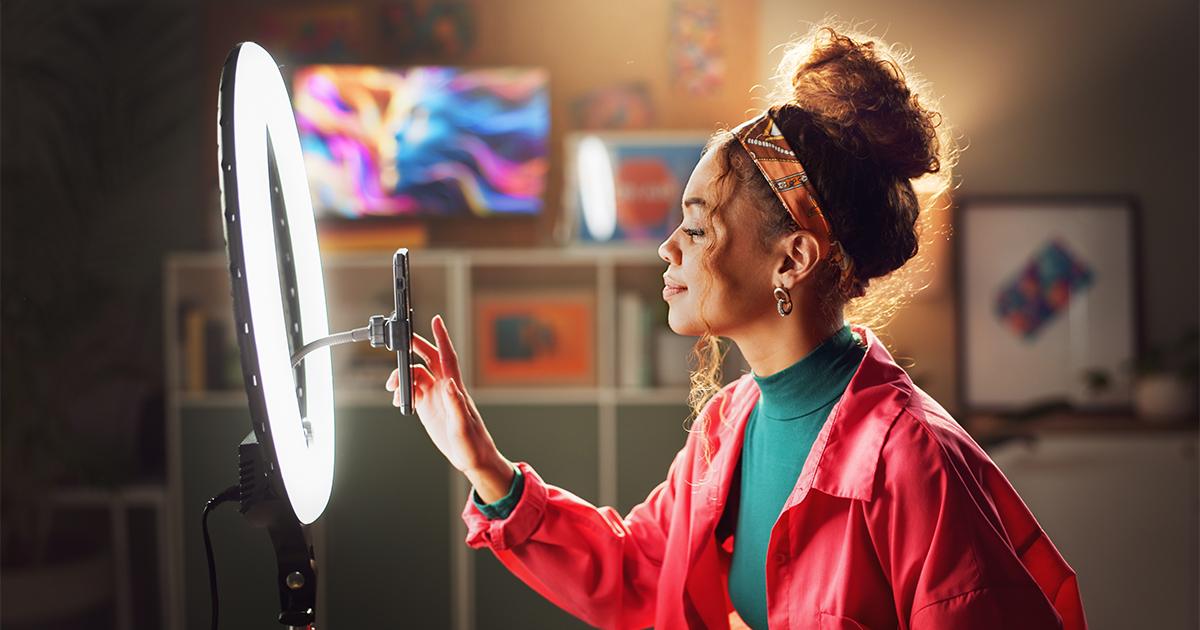
I couldn’t help but chuckle the other day when three different creators on Instagram unboxed the exact same package from a famous brand and in the exact same way, right down to the “surprised” squeals. Having been a journalist for many years, I’m well aware of the inner workings of companies and influencers, of the endless flow of “gifted” products and carefully choreographed reveals. But now, even I find myself overwhelmed by the coordination. Τhat sudden, almost inescapable wave when the same bag, the same serum, the same pair of shoes is being pushed by everyone, everywhere, all at once… and then just as quickly, it’s gone. Cue the existential question: Is influencer culture losing its mojo, or just getting, well, too familiar?
The zenith of influence
It’s hard to deny that we’ve been living through the golden age of influencer marketing. In 2024, social media became the world’s largest advertising channel, driving an eye-watering $247.3 billion in global ad spend. By the end of 2025, that figure is expected to climb to $266.9 billion, according to Traackr’s “2025 Influencer Marketing IMPACT Report” and the “Influencer Marketing Benchmark Report 2025” by Influencer Marketing Hub.
The creator economy is booming right alongside it. Collabstr projects that influencer marketing alone will grow 12.1% this year, reaching $22.2 billion, while the broader creator economy could balloon to an astronomical $528.4 billion by 2030. To my eyes, that’s a tectonic shift in how we discover, talk about, aspire to own, and ultimately buy things. For brands—and the creators fueling their campaigns—the returns have been undeniable. From beauty and fashion to tech and travel, influencer marketing has been propelling products and destinations from obscurity to must-have status almost overnight. But how long can the hype hold?
Not so shiny anymore?
Here’s the thing about hype: it doesn’t last forever. According to a June 2025 Clutch survey, nearly 50% of consumers haven’t bought anything recommended by an influencer in the past year, and 53% say they trust paid endorsements less than they once did, indicating fatigue setting in.
The warning signs are everywhere. Morning Consult reports a five-point drop in trust in influencers between 2023 and 2024—a sharper decline among older consumers, though Gen Z and millennials still place more faith in digital voices. And in its own blunt assessment, the business magazine Fast Company pointed to “oversaturation, consumer fatigue, and declining trust” as the forces now threatening influencer-driven advertising.
The deeper problem, though, is credibility. Typeform’s Get Real study found that only 30% of people believe influencers actually use the products they promote, while half would unfollow someone caught buying followers. Nearly 40% said relatability—not fame—is the true driver of influence.
And then there’s the AI problem. Take Mia Zelu, for instance: an AI-generated influencer with over 150,000 followers who “attended” Wimbledon 2025 without ever leaving the server. Glossy, convincing and entirely unreal. According to The Australian, virtual personas like hers are accelerating the trust crisis: 79% of consumers now say traditional ads feel more authentic than influencer posts, and 82% distrust social media content in general. Even Reuters found that over half of Gen Z already feel disillusioned with AI influencers, insisting they still crave human connection.
The shift isn’t confined to influencers, either. A few weeks ago, Vogue US ran a Guess campaign built entirely from AI-generated visuals, right down to the unmistakably synthetic model. The disclosure was buried in the fine print, but the backlash in creative circles was immediate. For brands that have spent decades curating every visual cue, AI introduces a new variable: content that’s fast, cheap and stripped of the human texture that gives a brand emotional weight.
No wonder consumers are gravitating toward micro-creators, niche voices with smaller but more authentic communities, as an antidote to the high-gloss sameness saturating feeds.
All told, influencer culture is facing a reckoning, driven by overload, skepticism, and a creeping sense that the magic of “creators” is, well, losing its shine.
The business of staying relevant
Reports, however, of the influencers’ demise may be premature—much to my chagrin. Far from fading, influencer marketing is being sharpened, refined, and in many ways professionalized. Sprout Social finds that 86% of U.S. marketers plan to partner with influencers in 2025, and more than a quarter of brands are dedicating over 40% of their budgets to these collaborations. Another Sprout Pulse survey earlier this year showed that 59% of marketers expect to increase their influencer spending, while only 37% plan to hold steady.
The mechanics are shifting, too. Collabstr reports a 93% surge in user-generated content creators—which in practice means the rise of “everyday influencers,” regular people with small followings who are paid to post photos, videos, or product reviews. It’s cheaper, more relatable, and often more effective. Pair that with a slight dip in average spend per collaboration, and strategies are becoming both broader and more affordable: a brand can now hire 50 small creators instead of blowing the budget on one celebrity endorsement.
The economics are also changing. Aspire notes that CPMs (the cost advertisers pay for every thousand views) have fallen by 53%, making influencer campaigns cheaper for brands to run. At the same time, affiliate revenue is up 71% year-over-year, meaning influencers are relying more on commissions from actual sales rather than just flat fees. In practice, they may be charging less upfront, but they’re betting on their ability to convert clicks into purchases.
And the model is evolving. Influencer Marketing Hub predicts that 2025 will be defined by AI, tighter communities, and hyper-personalization, a shift away from splashy mass campaigns toward smaller, more meaningful engagement. In other words: less confetti, more conversion.
Keeping it #real
Here’s where I land: we do need influencers. Not the AI-generated avatars with flawless skin and no heartbeat, but real people with real stories who can connect with audiences in ways that glossy campaigns never could. Influence, when it works, is still rooted in trust and in the sense that someone is speaking from experience rather than an algorithm.
But clarity and accountability must come with it. In a world where truth is increasingly distorted to serve private motives, and where questionable ideas and products are dressed up and sold for profit—sometimes with devastating consequences for people’s health, finances, or wellbeing—the least we can demand from influencer culture is honesty. Authenticity cannot be optional, disclosure cannot be an afterthought, and accountability cannot vanish in a puff of hashtags. If the industry wants to remain relevant, it needs to remember that influence is a responsibility, not just a revenue stream.


