
Key takeaways:
- The Middle East, Latin America, Southeast Asia, India, and Africa combined now represent a personal luxury market worth approximately €45 billion as European luxury contracted and China’s spending fell in 2025.
- The new fashion capitals are not assimilating into the Western fashion model. From India’s centuries-old luxury lineage to Seoul’s creative independence and Saudi Arabia’s homegrown brand development, they are operating on their own terms.
- European fashion retains its value through craftsmanship, provenance and storytelling. But other economies are rising, and new centers of gravity are claiming their place alongside the long-established powers.
For most of the past century, fashion had a clear address. Paris. Milan. London. New York. The hierarchy was unspoken but universally understood: if it happened elsewhere, it wasn’t even worth mentioning.
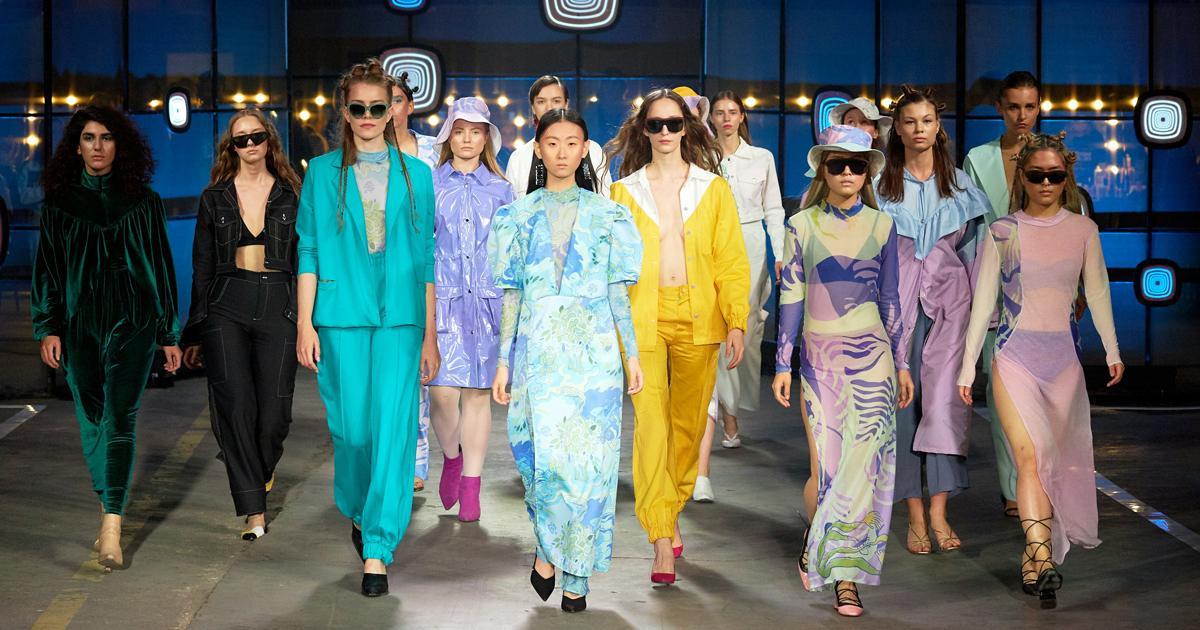
That geography of power and influence is breaking down. Economies rise and fall. Markets shift. The geopolitical order has been upended. New fashion and luxury capitals are emerging. Riyadh, Seoul, Mumbai and São Paulo are drawing their own coordinates and their own terms, and the global market is recalibrating around them, not the other way around.
The new fashion capitals in numbers
The evidence is not anecdotal. According to the 2025 Bain-Altagamma Luxury Goods Worldwide Market Study, the Middle East, Latin America, Southeast Asia, India, and Africa together now represent a personal luxury market worth approximately €45 billion — the same scale as Mainland China. In fact, the Middle East was the standout regional performer in 2025, growing at 4–6%, while Europe contracted between 1% and 3%, China’s luxury spending fell 3–5%, and Japan decelerated after a strong 2024. The Americas held relatively firm on the back of US domestic demand, but the directional shift in the global luxury fashion market is clear.
In Saudi Arabia specifically, the numbers are unambiguous. At the 2026 RLC Fashion Summit in Milan, Burak Çakmak, CEO of the Saudi Fashion Commission, confirmed the Kingdom’s fashion market stands at $34 billion, with projections reaching $40 billion by 2029. “We are in this journey just over five years,” he said, “but it’s progressing very fast.” Executives operating across the Gulf acknowledged the geopolitical reality and addressed it directly. “Our region is going through turmoil,” said Maria Gedeon, CEO of Gedeon Mohr & Partners, “but what’s equally true is that we’ve become the benchmark for resilience.” Alison Rehill-Erguven, CEO of Cenomi Centers, the Kingdom’s largest shopping center operator, offered a more commercial measure of that same confidence: “Opening a business in Saudi today is so much easier than the friction and the perception of the past.”
Seoul’s position is equally clear. South Korea’s luxury goods market was valued at $16.56 billion in 2025. The global reach of K-fashion — the broader cultural and commercial export of Korean style and aesthetics — is now a $10.2 billion market expanding at close to 25% annually. Samsung Fashion Research Institute has described the shift precisely: South Korea has moved from “a passive regional market to an active test bed shaping trends across Asia.”
In Brazil, international luxury houses are enlarging flagships in São Paulo to capture demand that might otherwise travel to Miami or Paris. The country’s tourism sector grew 59% between 2023 and 2025, and a newly launched Rio Fashion Week drew buyers from Galeries Lafayette and Selfridges to its first edition in 2026. India’s luxury fashion market reached $9.85 billion in 2025, and Deloitte’s Global Powers of Luxury 2026 identifies it among the most influential engines of global luxury growth, alongside the Middle East and Southeast Asia.
On their own terms
However, the more significant shift is not the commercial scale. It is the cultural conviction.
At this year’s RLC Fashion Summit in Milan, Masaba Gupta, founder of House of Masaba, stated plainly: “Made in India for the longest time was considered as a compromise. Today it is a credential.” The remark captures something that extends across the new fashion capitals: the direction of aspiration has reversed.
Rahul Prasad, managing director at Pike Preston for Asia Pacific, Middle East and India, made the historical context clear: India’s relationship with luxury is not recent. Cartier, Boucheron and Goyard were present in India from their earliest years, a lineage that predates most Western assumptions about where luxury originates and who defines it. And as Jimmy Choo creative director Sandra Choi observed in Monocle, India has “a deep-rooted appreciation for luxury, craftsmanship and glamour.”
Seoul is working from the same confidence. Korean designers are not seeking Paris for validation. Labels like Ader Error and Post Archive Faction are being sought out by international buyers. In Lagos, designers including Tolu Coker are selling at Nordstrom and Moda Operandi, while Lagos Fashion Week — now in its 15th year — deepens its connections across the global fashion system. In Saudi Arabia, the Fashion Commission’s Saudi 100 Brands program is developing local talent oriented toward the domestic market, not toward Western export models.
What Europe knows
Carlo Capasa, president of Camera Nazionale della Moda Italiana, speaking at the 2026 RLC Fashion Summit, declined to frame the shift as a threat. Italy, he argued, has always operated as a cultural bridge: “When the world is open, safe, global, we go well.” The Italian fashion system exports 80% of its production and has consistently drawn strength from exchange rather than enclosure.
John Hooks, board member of Armani Group and a long-term advisor to the global luxury fashion market, was direct about what is ending: “I think we’re coming to the end of a certain era.” European heritage retains value thanks to the craftsmanship, the provenance and the accumulated storytelling. But other economies are rising, and new centers of gravity are claiming their place alongside the long-established powers.
These new fashion capitals are not tearing anything down. They are adding coordinates that the industry’s old maps did not include. The conversation has changed. But not so much that it cannot still draw on what came before.
As Stefania Lazzaroni, CEO of Altagamma puts it: “Luxury has always been a nomadic field. It’s a reflection of what society is doing.”


