
Key takeaways
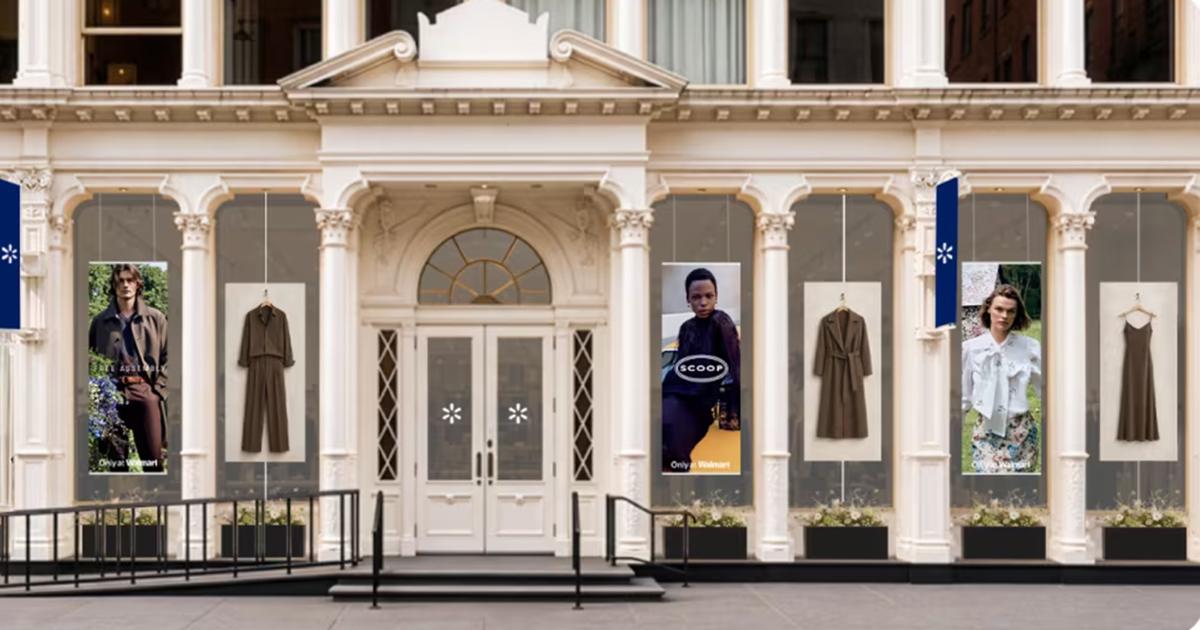
- Walmart staged a ten-day pop-up during New York Fashion Week, showcasing Brandon Maxwell-designed labels Free Assembly and Scoop alongside newer additions Scenario and Avia.
- Target built an experiential retail installation at the New Museum, presenting years of design collaborations set against new commissions from Daniel Arsham, Chloë Sevigny and Venus Williams.
- As luxury prices continue to climb beyond the reach of aspirational consumers, both retailers are building credible, design-led fashion offers for a customer who has been progressively priced out of the top end of the market.
Every September, New York Fashion Week takes over the city.
The front rows fill with faces you recognize from film sets, album covers and sports arenas. The catwalks with models like Gigi Hadid and Paloma Elsesser, and whoever else the moment has decided is next, working clothes that will land in stores six months from now. Fashion at its most concentrated, most theatrical, most alive. Always, folded into the spectacle, into something bigger: the dinners that raise millions, the debates that spill from the runway into the news cycle, the street style that travels the world. The gallery openings, the pop-ups, the parties that run until dawn. This is New York Fashion Week at its best. Season after season, it makes the case for fashion as culture. And I love it. Always have.
This year, while all of that was unfolding on the official calendar, something else was happening on the sidelines.
The other show in town
A few blocks from the official venues, two of the world’s largest retailers had set up their own productions.
At 1 Bond Street in NoHo, Walmart had taken over a space to showcase Free Assembly and Scoop, its most elevated in-house labels, both designed by Brandon Maxwell, whose own luxury line has dressed Lady Gaga, Michelle Obama and Oprah, alongside newer additions Scenario and Avia. The Bond Street space ran for ten days, styled and presented as a serious fashion destination.
On the Bowery, Target had gone further still. At the New Museum, one of New York’s leading contemporary art institutions, the company built a New Museum Retail Experience. Inside: years of design collaborations with Michael Graves, Marimekko, Missoni and others, placed alongside live reinterpretations of the iconic Target shopping bag by Daniel Arsham, Chloë Sevigny and Venus Williams.
Walmart and Target. Between them, they serve hundreds of millions of people every week — groceries, school supplies, electronics, the full spectrum of everyday life. Fashion has always been part of that offer. This September, they showed up at New York Fashion Week making a clear case: that with serious creative muscle behind their labels, they belong in the conversation.
A long-term plan
What happened at Bond Street this September is not an isolated case. Walmart has been building toward this for years. In 2019 it relaunched Scoop, a genuine New York fashion brand with a history, as a private label. In 2021 it brought in Brandon Maxwell as creative director of both Scoop and Free Assembly — someone with genuine fashion credentials. Maxwell has delivered four seasonal collections a year for both brands since. Stores were renovated to put apparel front and center. A virtual fitting room technology was acquired. And for the second consecutive September, Walmart staged a presence at New York Fashion Week: 401 W 14th Street in 2025, Bond Street in 2026.
The thinking behind it was articulated plainly by Denise Incandela, Walmart’s EVP of Apparel and Private Brands, speaking to WWD earlier this year. “We have 145 million people through our stores and website every week. Why weren’t they buying their fashion? We were winning on price, but we weren’t winning on style and quality.”
Bond Street was the most visible proof yet that Walmart has both the will and the resources to follow through on its plan to transform what was once a functional, unremarkable fashion offer into something worth giving its own address — even if only for a few days.
The design argument
Target came to New York Fashion Week with a heritage argument and chose its venue accordingly. The New Museum is one of New York’s most respected contemporary art institutions. Putting an experiential retail installation inside it is a statement about what kind of company you believe yourself to be.
“Target by Design celebrates our long-standing commitment to making great design accessible,” said Michelle Mesenburg, Target’s chief brand officer. The word “long-standing” is doing significant work in that sentence. And it is accurate. Target has been running designer collaborations for many years. Missoni. Marimekko. Michael Graves, you name it. This is a consistent, deeply held belief that good design should not be the exclusive territory of people who can afford to pay luxury prices for it.
That is Target’s end game. Not to become a fashion brand. Not to compete with the houses showing a few blocks away. But to serve a customer who wants considered, well-designed things in their life and has neither the budget nor the inclination to shop at the top end of the market.
Fashion’s melting pot
The context matters. Luxury prices have climbed steeply for years. The gap between what aspirational consumers can reach and what the industry’s most coveted names now charge has widened to the point where a large portion of fashion’s natural audience finds itself on the outside; people with the interest, the eye, and the desire, but progressively fewer options that feel worth their attention.
Walmart and Target are responding to that reality. Not by mimicking luxury, but by building a credible affordable fashion offer of their own, with genuine design history, serious creative talent, and a clear sense of the customer they are serving.
New York Fashion Week, as the name suggests, takes place in New York. This is a city that has absorbed cultures, languages and ambitions from every corner of the world and made them its own. A melting pot where the aspiration to make something of yourself has always been the common goal. The same week that sees extraordinary clothes on official runways sees a general merchandise retailer install a design retrospective at a contemporary art museum a few blocks away. High and low, expensive and accessible, runway and pop-up, all of it on the same streets, in the same week. New York has always worked this way. Fashion week does too.
Image source: walmart.com


