
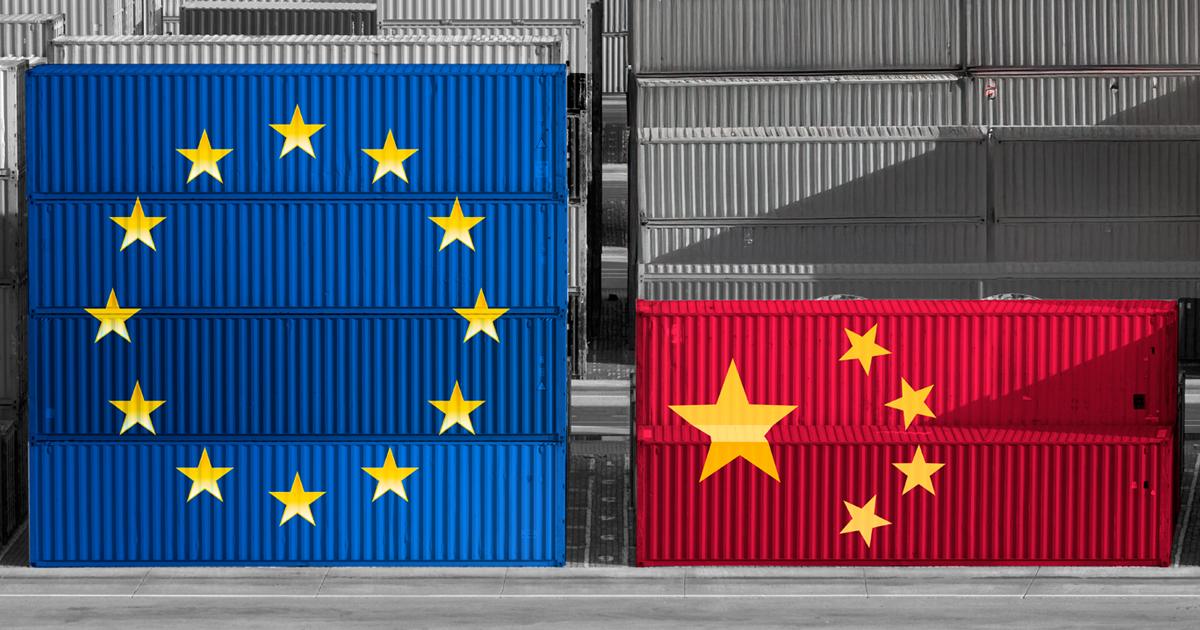
Europe’s retail battlefield has moved to the cross-border ecommerce front. And things are getting interesting. Chinese titans Temu and Shein, known for their slashing prices and flooding feeds with algorithm-fueled must-haves modus operandi, are becoming dominant forces in the European market. In fact, they’re commanding the attention—and wallets—of millions of European consumers at record speed.
From Berlin to Barcelona and from Milan to Stockholm, shoppers are scrolling, clicking, and checking out in droves, lured by deals that seem too good to be true. For retailers across Europe, at this point it’s not a matter of if these digital-first invaders will steal share; it’s how much, how fast, and whether anyone can stop them.
China leads the charge—Turkey close behind
In 2024, the European Union witnessed an influx of 4.6 billion low-value parcels—averaging 12 million parcels per day—a staggering 91% of which originated from China. This marked a doubling from the previous year, highlighting the explosive growth of Chinese platforms like Temu, Alibaba and Shein in the European market—in fact, the ecommerce giants grew to 75 million users within a few months in 2024.
Currently, only six member states are responsible for 89% of the imported goods online in Europe. In some of these markets, the impact is even more pronounced: in Spain, Chinese platforms account for a remarkable 34% of online purchases, followed by Italy at 14%, France at 9%, Germany at 8%, and the United Kingdom at 6%—highlighting the significant proliferation of ultra-cheap retail destinations across the common market.
Meanwhile, Turkey is also emerging as a notable player in the European ecommerce landscape. Leading Turkish platform Trendyol is gaining traction, offering competitive alternatives and challenging established players. Mohammad ElAnsari, who leads Trendyol’s Gulf operations, discussed the platform’s ambitions during a panel discussion on marketplaces at the 2025 RLC Global Forum in Riyadh: “We’re here to enable local partners to sell locally, regionally, and internationally… Build an ecosystem where value flows in every direction.”
The EU strikes back
The rapid expansion of these platforms has not gone unnoticed by European regulators. Alarmed by concerns around unfair competition, tax evasion, and product safety, the European Commission has proposed a €2 flat fee (about $2.27) on every low-value parcel entering the EU. This measure aims to offset administrative and customs costs associated with the massive volume of imports and to level the playing field for European retailers.
And that’s just the beginning. Additionally, Brussels plans to eliminate the current duty-free threshold for items under €150, requiring sellers to register for VAT and become accountable for product safety. The new handling charge would be levied on online retailers, not consumers, and would not appear as a separate cost on customer delivery invoices. The aim, according to EU officials, is to make major international cross-border ecommerce platforms pay a fair share for the customs infrastructure they heavily rely on.
Meanwhile, across the common market, countries are changing their stance. France started examining a proposed law that aims to reduce the textile industry’s environmental impact, with the legislation specifically targeting ultra-fast fashion players.
The message is clear: If you are doing business at scale in Europe, it’s time to start paying your way.
The big spend
With the EU poised to impose new parcel fees and eliminate duty-free thresholds, the clock is ticking on Shein and Temu’s cost advantage. Nonetheless, both companies are going all-in in Europe. And with good reason. The recent actions of the Trump administration, which, as of May 2, 2025, eliminated the de minimis exemption for Chinese imports, has them looking elsewhere to safeguard margins and future-proof their global expansion.
In anticipation of this shifting landscape, in early 2025, both platforms significantly ramped up their digital advertising across key European markets. In fact, Shein boosted its ad spending by 35% in both the UK and France, while PDD Group’s Temu increased spending by 40% in France and 20% in the UK month-over-month, according to Sensor Tower data provided exclusively to Reuters.
The strategy? Build loyalty, scale fast, and entrench their presence before Europe’s change of heart and legislation. Once regulation catches up, the margins won’t be nearly as generous.
Things already seem to be going south: PDD Holdings, Temu’s parent company, just missed Wall Street’s Q1 revenue estimates. Its domestic platform Pinduoduo struggled under weak consumer sentiment, while Temu faced pressure from global trade uncertainty. U.S.-listed shares of PDD dropped nearly 7% in premarket trading after the announcement.
For now, all lanes point toward Europe. Whether this gamble pays off remains to be seen.
Europe’s retail reality check
Tariffs and legislations aside, the boom of Chinese ecommerce presents both challenges and opportunities for European retailers. On one hand, they face intensified competition from companies offering a vast array of products at unbeatable prices. On the other, the situation prompts local retailers to innovate, enhance their digital presence, and explore new strategies to retain and grow their customer base.
Here’s how EU retailers can stay in the game:
- Redefine value, beyond price: Quality, sustainability, and local provenance are in fact powerful differentiators when competing with fast-and-cheap imports.
- Double down on tech: AI, predictive analytics, and smarter inventory systems can turn customer data into curated, high-retention experiences.
- Think like a platform: Whether through DTC ecosystems, strategic alliances, or curated marketplaces, collaboration is the new edge.
Navigating the new ecommerce era
The rise of Chinese ecommerce platforms like Temu and Shein in Europe signifies a shift in the retail paradigm. While they bring fierce competition, they also drive innovation and compel European retailers to adapt and evolve. By understanding the dynamics at play and proactively adjusting strategies, retail executives can position their companies to thrive in this new era of cross-border ecommerce.
But not every player can scale at the speed or cost-efficiency of their Chinese counterparts—let alone beat them at their own game. That’s where the European Commission must step in to ensure a level playing field. From closing tax loopholes to enforcing product standards, the role of regulation is clear: uphold fairness, protect consumers, and give European retail the breathing room it needs to compete on merit and not just margin.


