
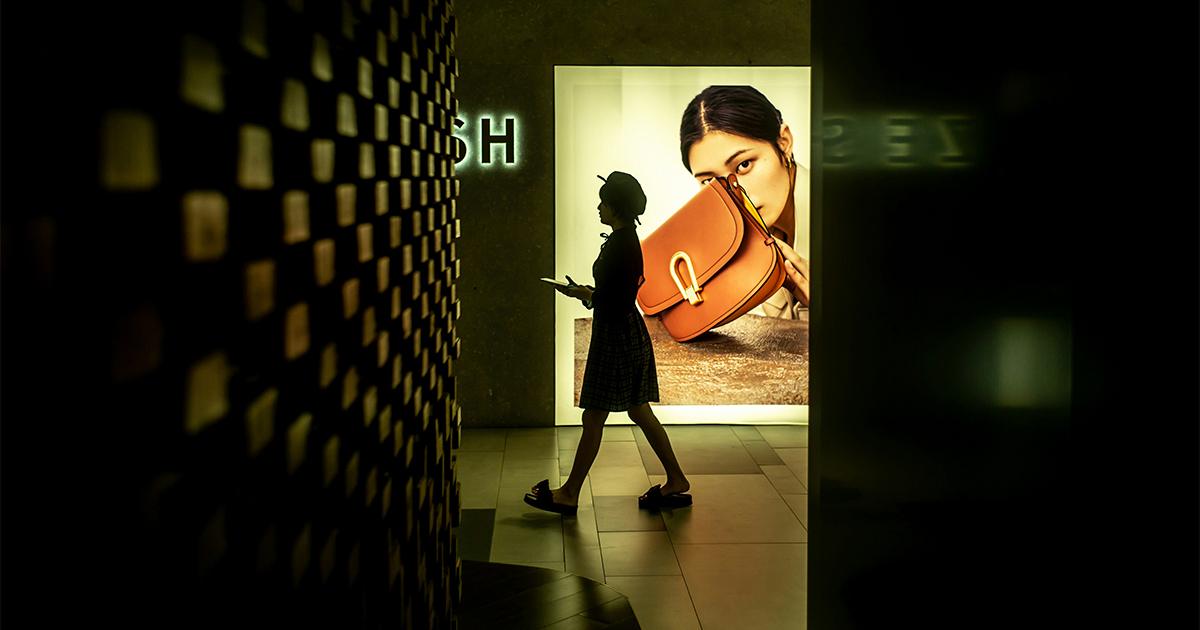
The multibrand luxury store—once the vibrant heart of luxury retail, where discovery thrived and brand stories intertwined—is faltering. Over the past decade, these boutiques have faced relentless pressure: luxury’s direct-to-consumer surge, rising tariffs, economic slowdowns, and the rise of mono-brand flagships. At this critical crossroads in 2025, the model no longer fits the modern consumer or brand. Reinvention is inevitable. Techenabled personalization, curated inventories, cultural relevance, and immersive experiences could turn these stores into hubs of discovery once again.
The slow fade of multibrand formats
Over the last ten years, luxury has steadily shifted away from wholesale and multibrand distribution. According to the 23rd edition of the Bain and Altagamma annual Luxury Study, the global personal luxury goods market shrank by 2% in 2024, down to €363 billion, pointing out that “luxury personal goods brands are going through a temporary crisis” “due to macroeconomic pressures and a polarized customer base.” Meanwhile, multiple sources suggest that 50 million luxury consumers exited the market since 2022.
In the department store channel specifically, multibrand retail suffered a steep decline—8–12% lower sales in 2023, and ongoing weakness through 2024. And while the decline in multibrand retail is most pronounced in the department store channel, multibrand e-commerce has shown greater resilience, dipping just 1% in 2023 from 2022 levels.
Concurrently, the share of luxury brands’ wholesale distribution dropped below half (48%), as brand-owned retail (flagship stores, ecomm) overtook wholesale at 52% in 2023—the first such shift ever recorded.
Footprint contraction is also evident in physical retail. Savills’ latest Global Luxury Retail Outlook 2025 projects slower store expansion through 2026, as brands restrategize their real estate in response to economic pressures. Reflecting this shift, retail experts agree that wholesale distribution is now far less important to luxury brands today than ever before.
Why this is happening:
- Monobrand real estate dominance: Flagship networks from brands like Louis Vuitton, Gucci, Loewe, Dior, and Chanel continue to grow, leaving less room and volume for independent boutiques. Increasingly, their online platforms serve not as standalone sales drivers but as digital “assists” a.k.a. tools to guide high-value shoppers into physical stores
- Macroeconomic headwinds: High inflation, rising interest rates and slower-than-expected recovery in China have dampened global luxury spending. Add to that currency swings and new import tariffs, and brands are being forced to rethink wholesale and multibrand strategies where margins are most vulnerable.
- Discovery fatigue and the curation gap: Luxury consumers face a growing tension between abundant choice and meaningful discovery. Reports from BCG and Vogue Business highlight rising frustration with overcrowded digital assortments and undifferentiated multibrand offerings, especially among Gen Z and Millennial shoppers seeking editorialized, guided experience.
Survival stories: Curation, specialization, experience
While broad-based multibrand stores struggled, a few formats have thrived through relentless focus on curation or specialization.
- 10 Corso Como and the cultural boutique
Milan’s 10 Corso Como, founded in 1990, remains iconic by blending art, fashion, and lifestyle under one roof, turning boutique retail into a cultural experience. Indeed, the boutique itself has become a destination not only for shopping but for a broader aesthetic and social encounter—part gallery, part salon, part curated escape.
- Level Shoes: Vertical expertise
Level Shoes succeeds by mastering vertical specialization. Its flagship in Dubai spans roughly 9,000 m² at The Dubai Mall, offering over 250 brands and unique services like a Personalization Hub and appointment-only suite. This sharp focus on footwear curation and luxury service turns the store into a destination rather than a mere point of sale, allowing it to weather sectorwide downturns and expansionary pressures.
- Mytheresa: Digital multibrand ecommerce
Mytheresa proves that online multibrand can still scale. The numbers don’t lie: against that backdrop, Mytheresa ended fiscal year 2024 (June 30) with annual revenues up 10% to $935 million (€841 million), and gross merchandise value (GMV) exceeding $1 billion (€914 million).
Mytheresa’s CEO, Michael Kliger, emphasized the company’s strong position in the luxury market: “We clearly see ourselves as a winner in the consolidated luxury space,” he told analysts and investors. “We’re building a community for luxury enthusiasts and building it with digital experiences is paying off.”
Anatomy of a 2025ready multibrand luxury store
So what would a revitalized multibrand store look like in 2025? It revolves around three pillars:
AI is becoming essential for helping luxury shoppers navigate overwhelming choice. Zegna’s AI-powered styling platform, Zegna X, can generate up to 49 billion outfit combinations(!), while customers who use the tool spend 75% more than those who don’t. In fact, Edoardo Zegna, chief marketing, digital and sustainability officer, stated to Vogue Business that the goal is not to replace the sales representatives. “On the contrary, it helps us instead to help them become more effective, adding more quality.”
Meanwhile, immersive technologies, like virtual fittings, AR tools, and digital product passports, are transforming how high-end service is delivered across both physical and digital touchpoints.
- Exclusives and experiences
From capsule collections to artist residencies, exclusive drops help multibrand stores reclaim cultural capital. Events like panel talks, exhibitions, or in-store performances turn retail into a destination, offering experiences that mono-brand environments often can’t replicate.
- Curation and vertical focus
In today’s market, luxury success depends less on ubiquity and more on coherence. Multibrand stores that focus on specific categories, like footwear, eyewear, or beauty, can position themselves as true authorities. This kind of vertical specialization builds trust, sharpens identity, and offers shoppers a sense of exclusivity that broad-format retailers often lack.
Is this a comeback?
The multibrand luxury store has declined, but it’s far from obsolete. Its next incarnation must deliver sharper curation, deeper experience, and smarter tools, underpinned by AI personalization and immersive programming. Stores like 10 Corso Como and Level Shoes, along with digital-first players like Mytheresa, offer blueprints for how the model can evolve; by becoming not a point of sale, but a point of view. They prove that with strategic reinvention, multibrand luxury retail can thrive again in 2025 and beyond.


