
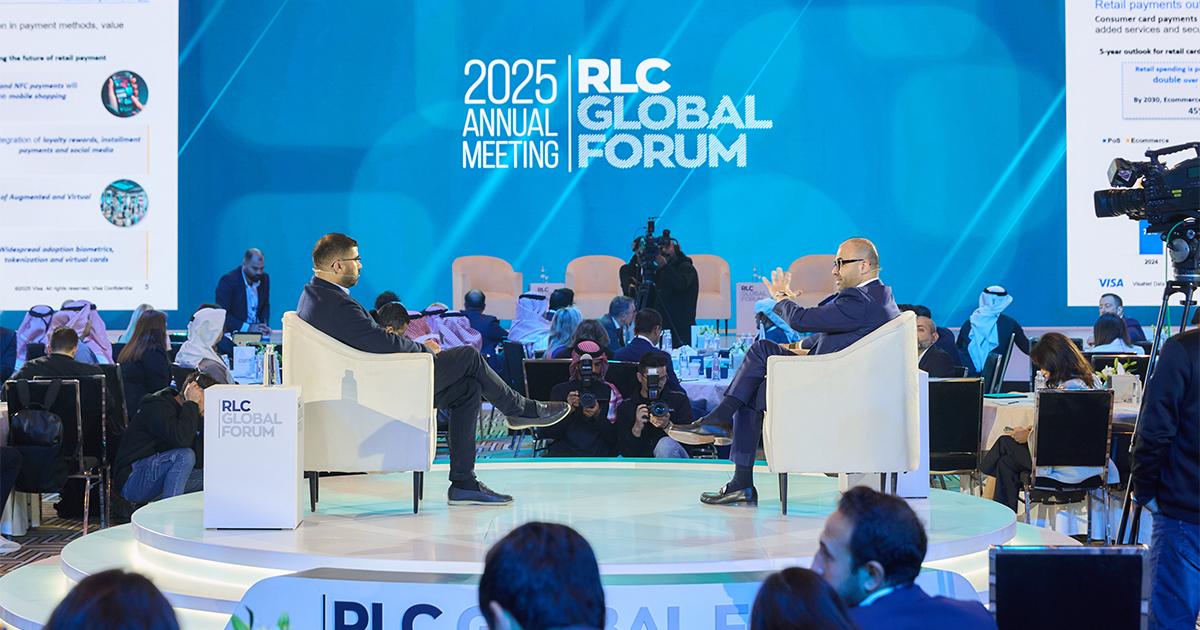
This discussion at the 2025 RLC Global Forum delved into the latest shifts in consumer behavior and the role of digital transformation in reshaping the travel retail landscape in Saudi Arabia. Muzzammil Ahussain, CEO of Almosafer, shared his insights in conversation with Ali Bailoun, Regional General Manager for KSA, Oman, and Bahrain at Visa, and explored how advanced technologies and omni-channel strategies are enabling seamless, personalized customer experiences. The discussion also covered the future outlook for travel retail in Saudi Arabia and the wider region, highlighting emerging trends and strategies for staying competitive in a rapidly evolving market.
Changing Travel Patterns and Their Impact on Retail
Over the past few years, significant investments in infrastructure, visa accessibility, and airline connectivity have made travel more dynamic. The easing of visa regulations in and out of Saudi Arabia has opened new possibilities for both inbound and outbound tourism. More frequent travel patterns, driven by changes in school calendars and an increasing number of short holidays, have led to a shift in consumer behavior, with travelers now booking multiple trips throughout the year rather than focusing solely on long vacations.
As a result, retail within airports and travel hubs is no longer just about duty-free shopping; it is about delivering experiences that match the expectations of a digitally empowered customer base. Brands must ensure that shopping is not only convenient but also engaging, offering a seamless blend of physical and digital touchpoints.
The Rise of Omnichannel Travel Retail
One of the biggest drivers of growth in Middle Eastern travel retail is the shift towards an omnichannel ecosystem, ensuring that travelers can seamlessly interact with brands before, during, and after their journey. Digital bookings have now become the dominant force in travel retail, with more than 75% of transactions happening online. However, while digital channels continue to grow, personalized human interaction remains essential for specific customer segments, particularly in luxury and business travel.
The industry is increasingly using AI-driven customer support via WhatsApp, automated pricing adjustments, and streamlined booking processes to meet consumer expectations while maintaining a high level of personalization. The ability to predict preferences and customize travel retail experiences will become an essential differentiator for brands.
Shifting Spending Trends Among Travelers
Consumer spending habits have also changed significantly. While affordability remains important, the emphasis is shifting from spending on transportation to spending on experiences. Lower airfares, driven by increased airline competition and expanded routes, have freed up travelers’ budgets, allowing them to allocate more spending to hotels, entertainment, and retail purchases at their destinations.
With new airlines launching in Saudi Arabia and across the GCC, connectivity has never been stronger, reinforcing this trend. Retailers and travel brands must recognize that travelers today are looking for more than just products—they are looking for memorable, seamless, and high-quality experiences that make their journeys more enjoyable.
The Role of Technology in the Future of Travel Retail
Looking ahead, technology is poised to play an even greater role in shaping the future of travel retail. AI-powered travel assistants, dynamic pricing models, and fully automated booking experiences will soon become standard. The industry is also exploring ways to integrate personalized recommendations, fintech solutions, and bundled services to enhance customer convenience. The ability to anticipate a traveler’s needs based on past behavior and seamlessly execute bookings, itinerary changes, and add-ons will define the next evolution of luxury and mass-market travel retail alike.
The future of travel retail in the Middle East is no longer just about duty-free shopping or convenience—it is about delivering seamless, personalized, and experience-driven interactions that cater to modern travelers. As consumer expectations evolve, brands must rethink their omnichannel strategies, digital integration, and service offerings to remain competitive in an increasingly dynamic market.
With travel becoming more accessible, airline competition driving down fares, and spending shifting toward experiences, the key to success lies in offering more than just products. The most successful travel retailers will be those that can blend digital efficiency with high-touch engagement, leverage AI-driven insights for personalization, and create meaningful connections with travelers before, during, and after their journey.
Key Statistics
- 75% of travel retail transactions now occur online
- Saudi Arabia’s domestic travel market now accounts for 40% of total bookings,
- AI-driven customer service channels now handle over 20,000 daily inquiries, improving efficiency and personalization.
“The biggest change we’re seeing is that people are flying cheaper, but spending more at their destinations. Whether it’s in Saudi Arabia or abroad, travelers are now prioritizing experiences over the cost of getting there.”
Muzzamil Ahussein


