
Beyond Cost-Cutting: Investing in Growth and Innovation
In an era where profitability and sustainability often seem at odds, companies must make strategic investment choices that drive long-term value. Growth is no longer about simply cutting costs or expanding for the sake of scale—it’s about identifying where investment will lead to meaningful business impact. For retailers, this means continually improving store environments, enhancing e-commerce capabilities, and leveraging AI and automation to deliver better customer experiences.
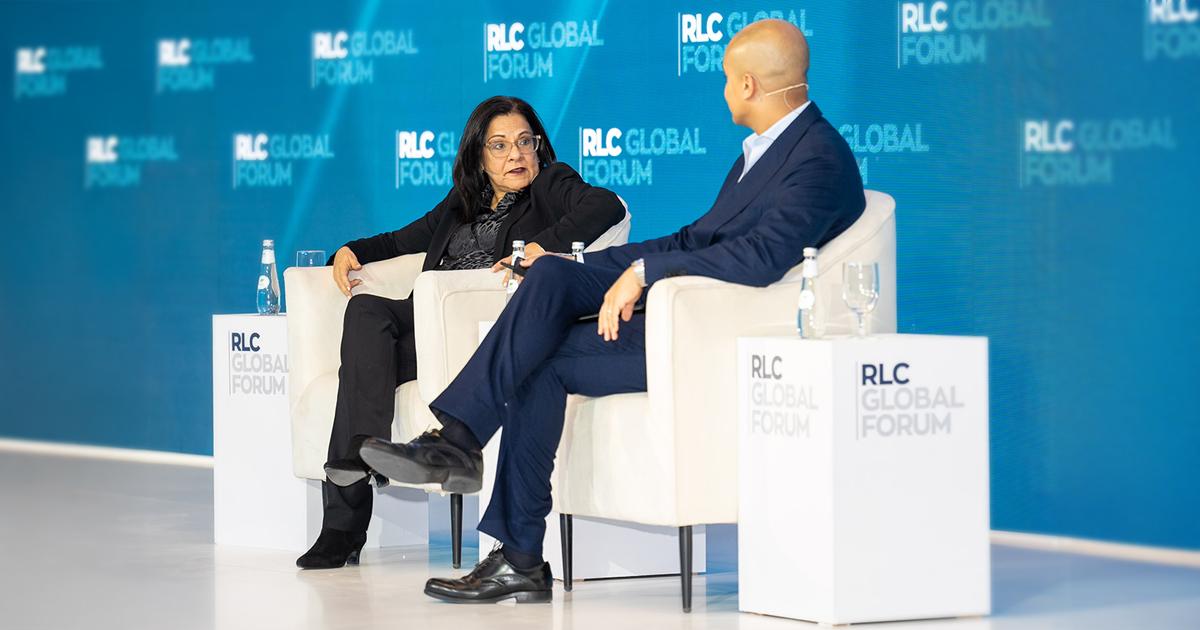
These themes took center stage during “A New Leadership Order: Navigating Growth, Resilience & Change,” a conversation between Renuka Jagtiani, Chairwoman & CEO of Landmark Group, and Abdellah Iftahy, Senior Partner at McKinsey & Company at the 2025 RLC Global Forum in Riyadh. Their dialogue underscored the importance of investing with intention—and leading with clarity.
Physical stores remain an essential part of the retail ecosystem, but they must evolve. Renovations, store format innovation, and the integration of digital-first experiences are critical to maintaining relevance. At the same time, affordability has emerged as a key priority. Lowering prices in categories like children’s fashion reflects a consumer-first approach that prioritizes long-term brand loyalty over short-term margins.
Digital transformation is another area where investment is reshaping businesses. AI is no longer viewed solely as a cost-saving tool—it’s a strategic enabler that enhances customer insights, personalizes experiences, and improves decision-making. But as Jagtiani emphasized, technology alone isn’t enough. True success lies in using it to complement strong leadership, a clear vision, and a business model that’s agile enough to meet the moment.
Defining Leadership in Times of Change
The role of leadership has never been more complex. Today’s successful business leaders must balance stability with agility, ensuring that their organizations are prepared for both short-term challenges and long-term shifts. Flexibility is key—not just in reacting to change but in actively shaping the future. Leaders who can build strong teams, encourage collaboration, and continuously push the boundaries of innovation will be the ones driving sustainable success.
A company’s core should not be defined by a single business or product but by its overarching philosophy and values. Businesses that have successfully adapted in the past have done so by staying true to their fundamental purpose while evolving their models. Whether through diversification, market expansion, or operational transformation, companies that approach change with a clear sense of direction will be able to sustain momentum even in challenging times.
At the heart of this new leadership order is people. No single leader can drive a business forward alone. Building strong, empowered teams that bring diverse perspectives, and skill sets to the table is essential. The best leaders are those who foster a culture of resilience, adaptability, and continuous learning, allowing their organizations to thrive even amid uncertainty
“The last five years have shown us that there is no single formula for success. Businesses must expect the unexpected, plan for change, and build resilience into their DNA.”
– Renuka Jagtiani


