
Key takeaways
- Cultural patronage has never been clean. The Frick, the Getty, the Guggenheim were all built on fortunes that would be indefensible today. The Bezos controversy is therefore an old problem, stripped of the distance that time usually provides.
- Social media has collapsed the gap between donor and consequence. The legitimacy that cultural patronage once reliably delivered is no longer guaranteed.
- Tech money is now inside fashion’s most prestigious institution. The fact that the Costume Institute now depends on Silicon Valley to keep the lights on says as much about luxury institutions as it does about the billionaire class.
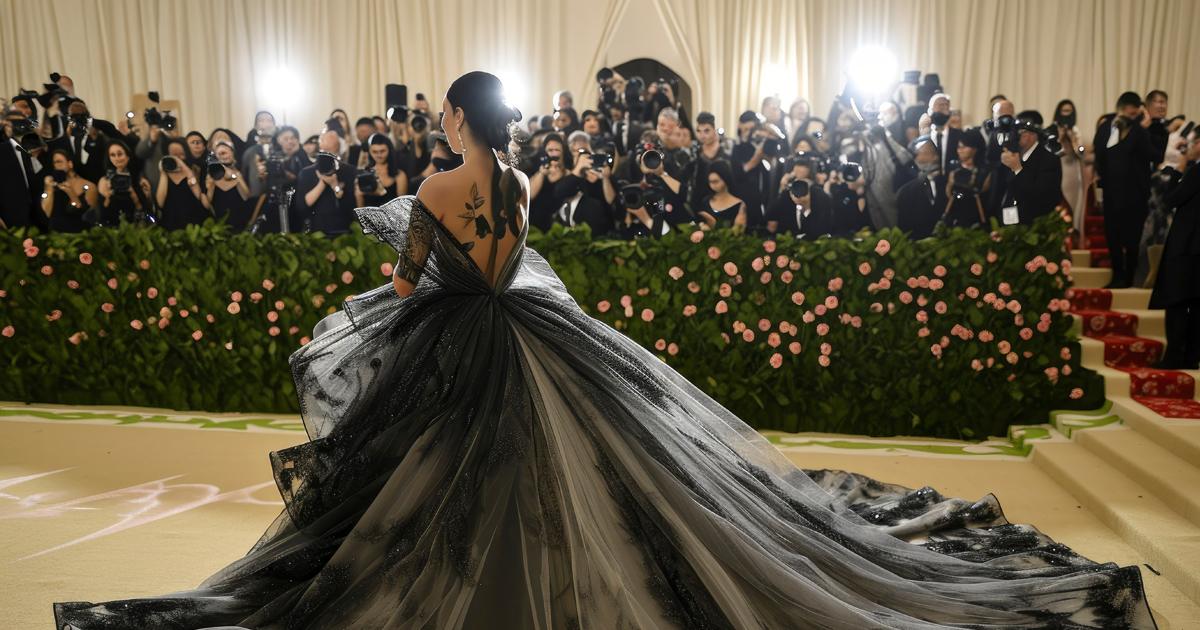
A few days ago, the first Monday of May, like every year, the steps of The Metropolitan Museum of Art’s Costume Institute filled once again with the annually spectacular, occasionally absurd, always revealing parade that is the Met Gala. The theme was “Fashion Is Art.” The dress code was “Costume Art.” And the lead sponsors were Jeff Bezos and Lauren Sánchez Bezos, who reportedly contributed $10 million to the cause, helping the event raise a record $42 million in total, up from $31 million the year before.
The backlash began the moment the sponsorship was announced. By April, subway stations across New York had been plastered covertly with boycott posters. Hundreds of fake urine bottles appeared around the museum in the days leading up to the event, a pointed reference to Amazon’s well-documented denial of bathroom breaks to its warehouse workers. And on the night itself, a cohort of high-profile celebrities — Zendaya and Meryl Streep among them — were conspicuously absent, with rumors swirling that their decisions were not coincidental.
I understand the anger. I do. But I also think we need to be honest about something: the practice it targets — wealthy, controversial patrons funding cultural institutions — is anything but new.
Has cultural patronage ever really been clean?
The history of museum funding is, to put it politely, complicated. The Frick Collection was built on the fortune of Henry Clay Frick, a steel magnate whose violent suppression of the 1892 Homestead Strike left dozens dead or wounded. The Getty was funded by oil money. J. Paul Getty, one of the richest men in the world, famously refused to pay his own grandson’s ransom in full. The Guggenheim family made their fortune in copper mining, with working conditions that would not survive a single news cycle today.
And the Met itself? Founded in 1870 by a coalition of businessmen and financiers whose industrial practices were, by any modern standard, deeply questionable.
But this is not even a modern invention. Cultural patronage has always involved a very deliberate exchange: new money in search of legitimacy, institutions in need of survival.
The arrangement is as old as the Renaissance and older. But it was the Gilded Age that perfected it as a strategy. The Fricks, the Rockefellers, the Vanderbilts understood that private wealth could fund what governments wouldn’t. The museums they endowed are still standing. The art is still on the walls. The public still benefits. That is a legitimate transaction, even when the motives behind it were not entirely selfless.
Nothing, it turns out, has changed.
So why does Bezos feel different?
I believe this is the question worth asking. And I think the answer has less to do with the ethics of museum funding, which have always been murky, and more to do with three specific things.
First, proximity. The Fricks and the Carnegies are distant figures, softened by time and marble. Whatever sins they may have committed have been aestheticized into architecture. Bezos is here, now, in real time, standing at the top of the Met steps while his warehouse workers earn an average of $19 per hour and struggle to take bathroom breaks. The distance that history usually provides simply doesn’t exist.
Second, visibility. The social media age has fundamentally changed what cultural patronage looks like. When Peggy Guggenheim funded the arts, it was covered in newspapers read by a narrow elite. When Bezos does it, it is dissected, memed, protested, and livestreamed simultaneously.
Third, and most importantly, it is no longer working. The traditional bargain of cultural patronage (you give us the money, we give you the legitimacy) appears to be breaking down. The Met’s record fundraising night did not rehabilitate Bezos’s reputation. If anything, it sharpened the critique. The protesters were standing outside the Met, in 2026, with fake urine bottles and projection screens.
What it means for fashion, art and institutional credibility
The 2026 Met Gala also marked something else: the first time a tech figure served as lead sponsor, and the first time multiple major tech companies, from Amazon and Meta to OpenAI to Snapchat to Shopify, purchased tables at the same cultural event. Fashion and art, it seems, are now firmly on Silicon Valley’s agenda. A realignment that is transforming the conversation around creativity, commerce and institutional power from New York to Milan.
What I find harder to dismiss is the signal it sends about the state of traditional fashion and luxury institutions. When The Metropolitan Museum of Art’s Costume Institute — the only Met department that receives no direct museum funding, entirely self-sustaining through a single night a year — needs $10 million from the founder of the world’s largest e-commerce platform, a platform that has done as much as any single company to accelerate fast fashion and disposable consumption, to fund an exhibition about fashion as art, something is wrong. The institutions that once defined cultural legitimacy are now dependent on the very forces that have complicated it.
That is the real story of Monday night. Not the outrage. Not the celebrities. Not the gowns. The fact that cultural patronage is alive, well, and more contested than it has ever been. And that no one, not even Anna Wintour, has quite figured out how to move beyond it.


