
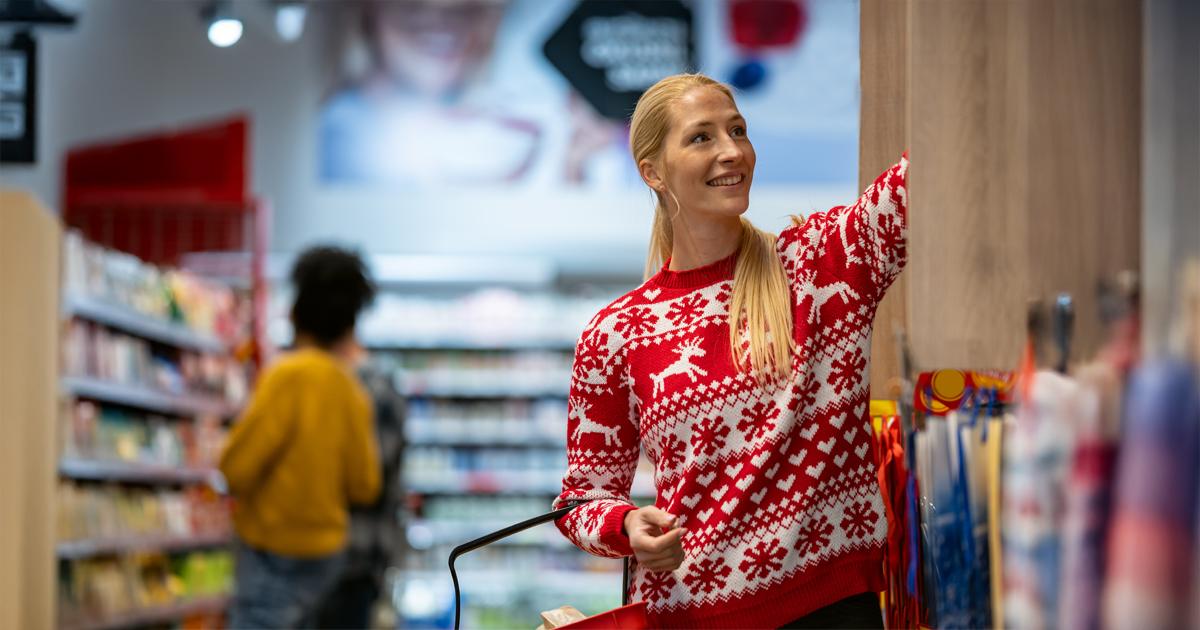
If there’s one thing the 2025 winter holiday season is making clear, it’s that the American shoppers have quietly reshaped their holiday habits: what they buy, what they gift, and, most interesting of all, where they shop. According to new findings from the National Retail Federation, grocery stores—those familiar aisles of produce, pantry staples, and seasonal treats—have emerged as one of the most important holiday destinations of the year.
With 46% of consumers planning to shop at grocery stores this festive season, the channel now stands shoulder-to-shoulder with department and discount stores as a core part of holiday spending.
‘Tis the season to be cautious
Before exploring why grocery is stealing the spotlight, it’s worth setting the stage. The broader holiday outlook is steady, quietly optimistic even. NRF projects 3.7% to 4.2% growth in holiday retail sales this year, signaling that consumers are managing their budgets with precision, not pessimism.
Shoppers expect to spend an average of $890 on gifts, seasonal items, and related purchases. That’s slightly down from last year ($902), but far from dramatic. More like a recalibration. Meanwhile, families with children are the only group planning to increase their budgets, reflecting the practical reality that holiday expenses rise as household needs grow.
In short: the 2025 holiday season is defined by intentionality. People are spending thoughtfully. And thoughtful shoppers reward retailers that offer convenience, and value.
Which brings us directly to grocery.
Where the holiday shoppers truly go
For all the talk about online retail (still strong at 55%, though down two points from last year), the 2025 winter holiday season offers a clearer picture of how shoppers are balancing their options. Most physical formats are holding steady or seeing slight declines, but they remain central to how people navigate the season. Here’s the breakdown:
- Grocery stores: 46% (unchanged from 2024)
- Department stores: 44% (down from 46%)
- Discount stores: 42% (3 points down)
- Clothing & accessories stores: 30% (was 31%)
- Small businesses: 21% (down from 23%)
- Electronics stores: 17% (2 points down)
What stands out is grocery’s remarkable consistency. While other store formats shift up or down by a point or two, grocery holds its ground, reflecting how essential it has become to the season. Shoppers are gravitating toward practical gifts, consumable items, food-centered gatherings, and efficient one-stop trips, all of which play directly to grocery’s strengths.
In that context, this winter holiday season underscores grocery’s relevance, simply meeting consumers where their priorities already are.
Black Friday stays big, with grocery riding the momentum
One of the standout insights from the NRF forecast is the sheer scale of Thanksgiving weekend. A projected 186.9 million shoppers are expected to participate this year—a record high, proving how central the long weekend remains to the tempo of the retail sector. And the single biggest day of all? Black Friday, with 130.4 million shoppers!
Cyber Monday follows at 40%, with 73.9 million consumers expected to shop the Monday after Thanksgiving. Saturday remains meaningful as well: 36% of shoppers (about 67 million people) say they may shop that day, and 80% of them plan to do so specifically to support local businesses and Small Business Saturday.
Additionally, as of early November, 58% of consumers reported they had already begun their festive shopping, consistent with patterns from the last five years. On average, holiday shoppers have completed roughly one-quarter (26%) of their planned purchases, which is early momentum, but not enough to reduce the importance of the long Thanksgiving weekend for retailers.
But here’s why this weekend matters so much for grocery: it fuels meal preparation, entertaining, household replenishment, dessert runs, snack missions, and every last-minute gap in the holiday plan. Grocery benefits directly from the rituals of the weekend, from Thursday’s prep lists to Sunday’s comfort-food traditions, creating a perfect storm of foot traffic and spending.
Gifts, gatherings, and the grocery advantage
Why grocery? Because it fits the way people are shopping for the 2025 holiday. NRF data shows that shoppers plan to give a mix of clothing (50%), gift cards (43%), toys (32%), and a steadily rising share of food and candy (28%).
That last category, consumables, has quietly become a holiday staple. They are accessible, low-risk, and universally appreciated, whether wrapped as gifts or brought to gatherings. Grocery retailers have leaned into this trend with aisles full of seasonal treats, curated snack boxes, premium sweets, festive décor, and increasingly polished private-label offerings.
Add in the rise of occasion-based spending, such as office celebrations or neighborhood gatherings, and the grocery trip becomes part preparation, part celebration, with gifting naturally included.
Where grocery goes from here
The 2025 winter holiday season reveals THAT grocery fits the way people actually move through the season. Grocery stores sit inside the weekly rhythm of American life; familiar, unpretentious places where people shop without ceremony. When the holidays arrive and to-do lists expand, that familiarity becomes its own form of convenience.
Shoppers already rely on grocery retailers for meals and home needs. Extending that trust to small gifts, festive treats, or last-minute additions is simply a continuation of habits that already shape the week. It reflects practicality, the kind that guides people toward what they know when schedules get tight.
This year makes clear that grocery’s relevance reflects a straightforward truth: the channel aligns with how consumers balance celebration, preparation, and everyday responsibilities. As holiday spending becomes more intentional and value-led, grocery remains a steady, intuitive stop in the mix.


