
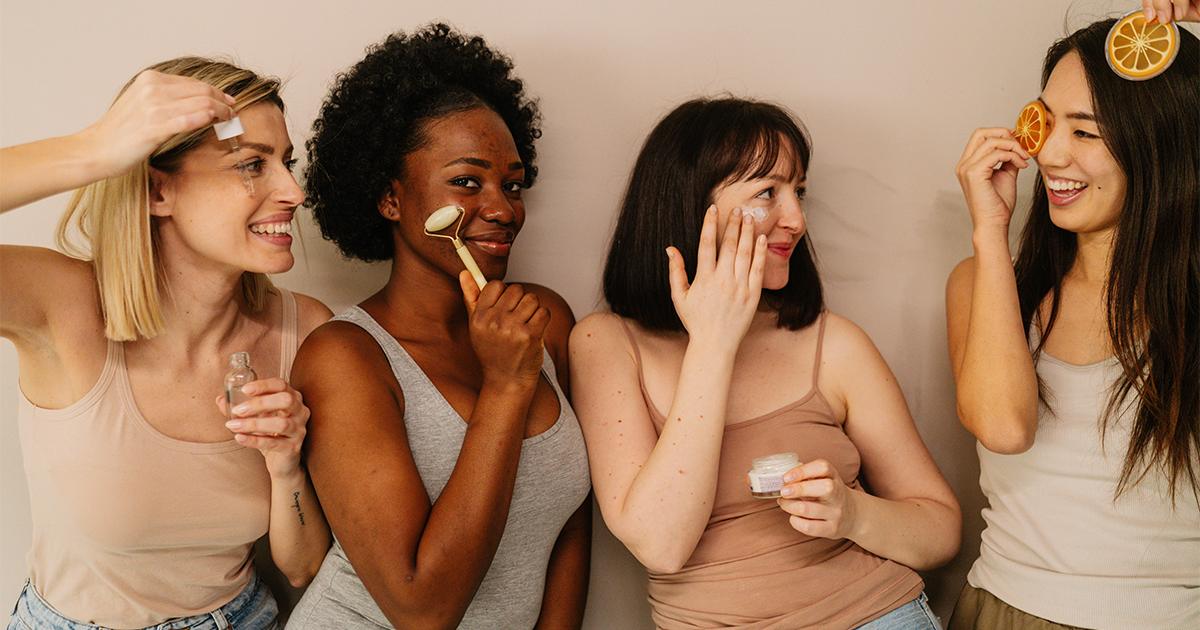
Somewhere between the 30-step skincare regimen, the collagen-infused sleep supplements, the gut and sleep pills, the treatments for back wrinkles(!!), the eyebrow lamination kits, and the 45-minute TikTok tutorials for “no makeup” makeup, beauty consumption has reached a kind of burnout.
We’ve optimized, analyzed, layered, cut, pasted, sprayed, and injected ourselves into a state of exhaustion. And beauty itself has become less of a ritual and more of an ever-expanding to-do list, overflowing with new hi-tech tools, miracle ingredients, and must-have drops debuting every other Instagram story.
And now, what? A reset. Consumers are scaling back and many of them are simply tuning out. Beauty, once a maximalist practice, is shifting into something more restrained and, maybe, just maybe, something more meaningful.
The rise of… skinimalism
Talking about scaling back our beauty—well, everything—the term “skinimalism” has emerged as a defining trend in recent years. It’s a philosophy, a movement if you will, that champions pared-down routines, essential products, and a glow that looks more like good sleep than good lighting.
In fact, according to several reports, there’s been a noticeable shift in the mood. Heavy contouring and high-coverage foundation, once the gold standard of online beauty tutorials, are starting to feel outdated. They are replaced by a preference for multipurpose products, skin tints and dewy complexions that reflect vitality from within, neutral nails, and barely-there makeup. The “skin-first” routine strips things back to what actually matters and mirrors a desire for beauty that feels effortless again.
Minimalist beauty has emerged as one of the most powerful movements reshaping consumer behaviors and brand strategies across the industry. Case in point: Pamela Anderson, once the poster woman for ’90s bombshell glam, has been widely praised for walking red carpets with no makeup at all, an act hailed as revolutionary. Her choice struck a chord: the cultural appetite for authenticity over artifice is growing.
Several brands have also aligned with this mood, not by flooding shelves with options, but by pulling back. Labels like Rhode, founded by Hailey Bieber, reflect this aesthetic realignment, offering just a handful of products focused on simplicity, efficacy, and skin-makeup hybrids that streamline the daily routine. It’s quality over quantity and a reminder that less can still make an impact.
Consumer behavior: The beauty of buying less
The modern beauty consumer is more informed and discerning than ever before. A study by Euromonitor International identifies “minimalist seekers” as consumers who prioritize authenticity, research their purchases meticulously, and are influenced by recommendations from trusted sources. Not only in beauty consumption, but in nearly every aspect of how people shop and spend.
In fact, Euromonitor’s report identifies minimalist seekers as the most significant global consumer type, accounting for more than 18% of the population.
This shift is also practical. Inflation, rising living costs, and global uncertainty have nudged consumers to rethink their spending across the board, including beauty. Enter the Lipstick Index 2.0 : while people may be buying fewer products overall, they’re still spending but more strategically. Think fewer impulse buys, more trusted staples. Small luxuries still endure, but now they’re expected to work harder for their place in the bathroom cabinet.
In the name of the dupe
Social media platforms, particularly TikTok, have played a central role in shaping beauty trends. The platform’s emphasis on short-form, visually engaging content has accelerated the discovery of new products and obsessions. This rapid cycle, however, has also led to the rise of “dupe” culture where affordable alternatives to high-end products go viral and gain popularity almost overnight.
While this democratization of beauty has made products more accessible, it has also contributed to consumer fatigue. The constant influx of new products, lookalikes and trends can be overwhelming, contributing to what trend forecaster WGSN calls the “Great Exhaustion.” Actually, in the report, 65% of global consumers say they’re feeling drained by the relentless demands of modern life, including what they buy, how they buy it, and what it says about them.
In this environment, even a $7 concealer can start to feel like a chore. For many, the once-familiar thrill of the haul is being replaced by a newfound craving for clarity. Less clutter, fewer choices and a beauty routine that’s giving more by demanding less.
Green is the new glam
Minimalist beauty isn’t solely about streamlining routines; it’s also about making environmentally conscious choices. And as fashion increasingly embraces sustainability, beauty is beginning to follow suit. Case in point: The demand for eco-friendly skincare products has grown exponentially over the past years, reflecting a broader consumer interest in sustainable beauty.
Brands are responding by adopting minimalist packaging and transparent ingredient lists. This approach not only reduces waste but also aligns with consumers’ desire for authenticity and ethical responsibility. As noted in a study on minimalist package design, consumers gravitate toward straightforward packaging that communicates a brand’s values clearly. Yet, greenwashing is rife—clean aesthetics and clever language often mask products that are anything but eco-friendly. As a result, consumers are learning to look beyond the label and demand proof, transparency, and brands that do more than just look the part.
The business case for minimalism
Embracing minimalism is definitely a strategic business decision. Brands that focus on curated product lines and transparent marketing are building stronger relationships with their customers. Nowadays, consumer behavior is driven by value, genuineness, and inclusivity rather than brand prestige. Influencer marketing is losing effectiveness as audiences demand sincerity and community-led content.
This shift is reflected in the quiet rise of brands that let their formulas and philosophies speak louder than their marketing. Aesop’s understated design, sensory experience, and resistance to trend-chasing have earned it cult status without the usual influencer fanfare. A principle the brand appears committed to upholding even after its acquisition by L’Oréal, at least according to Global Brand President, Garance Delaye: “It’s crucial for us to preserve Aesop’s culture and identity while supporting its future growth.”
Antipodes blends scientific credibility with sustainably sourced ingredients, all wrapped in earthy, minimal aesthetics that mirror its New Zealand roots. And Tata Harper delivers clinical-grade results through farm-grown botanicals. That’s luxury redefined for a conscious consumer.
In fact, Tata Harper, the brand’s founder has stated at Hispanic Executive that “As the beauty industry has evolved and consumers have become more educated and discerning, I’ve become even more committed to transparency and sustainability.”
These brands demonstrate that a focus on quality and integrity can resonate deeply with consumers, cut through the beauty trends noise, and turn principles into sales.
Embracing the “less is more” philosophy
The beauty industry’s stance towards minimalism reflects a broader cultural movement in beauty consumption that values authenticity, sustainability, and intentionality. Consumers are no longer swayed by the allure of endless product options and fleeting trends. Instead, they seek products that align with their values and simplify their routines.
And so, brands that embrace the “less is more” philosophy are poised to build deeper connections with their customers. By focusing on quality, transparency, and ethical, green practices, these companies can meet the needs of the modern consumer and thrive in an increasingly conscious marketplace.


