
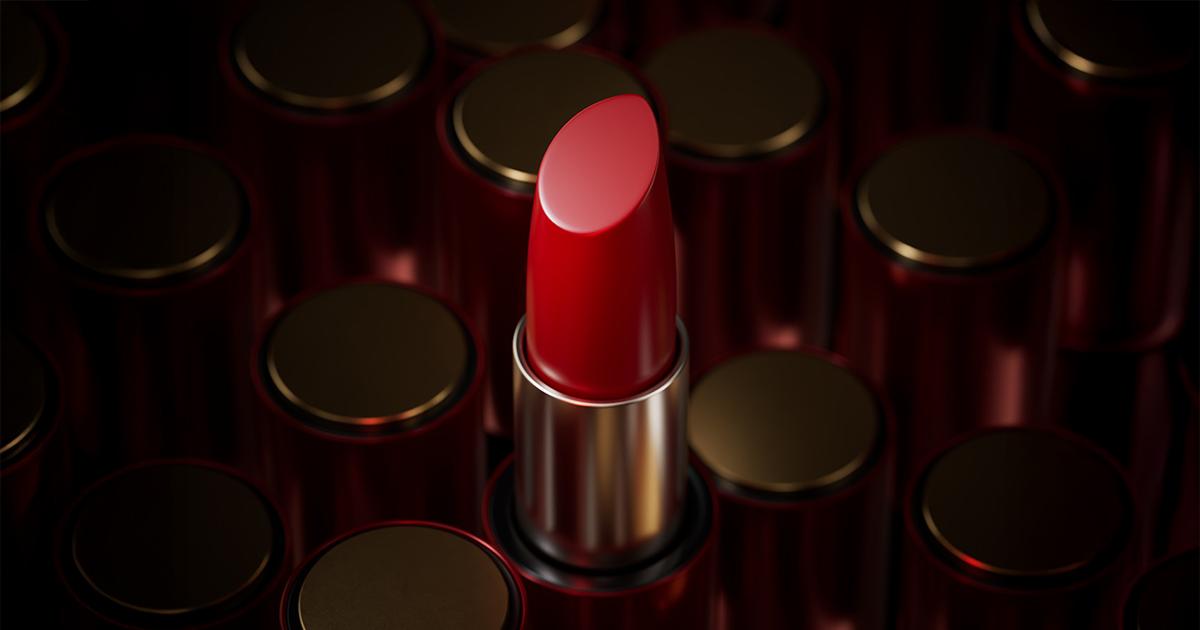
After years of speculation, Louis Vuitton has entered the luxury beauty market with a statement so bold it’s impossible to ignore: a $160 lipstick (alongside other equally extravagant makeup offerings)! The debut of La Beauté Louis Vuitton, developed in collaboration with legendary makeup artist Dame Pat McGrath, signals a decisive step into a new frontier for the brand, while cementing a luxury beauty strategy that pushes the boundaries of exclusivity.
The collection’s refillable lipsticks, balms, and eyeshadow palettes arrive housed in couture-inspired packaging, designed by industrial powerhouse Konstantin Grcic and rooted in Vuitton’s heritage of vanity trunks and travel objets d’art. But beyond the aesthetics, the pricing has sparked heated conversations across the market.
Some see it as a daring example of ultra-luxury cosmetics, where scarcity and prestige outweigh accessibility. Others warn of alienating consumers, particularly younger demographics already grappling with affordability pressures. This launch prompts a sharper question: is Louis Vuitton setting a new benchmark for luxury beauty or overplaying its hand?
A bold beauty play
As the crown jewel of LVMH, Louis Vuitton has built its empire on exclusivity, heritage and cultural cachet. Branching into beauty marks a calculated move, especially given the size and growth of the global luxury beauty market.
Pietro Beccari, CEO of Louis Vuitton, positioned the launch as a natural evolution of the house’s identity, explaining: “Through this new universe, we have the opportunity to further accompany clients in their everyday lives with purpose and pleasure, while continuing to celebrate our creativity and heritage.”
By introducing lipsticks priced at $160 and eyeshadow palettes around $250, Louis Vuitton is intentionally staking out the hyperpremium cosmetics arena. Rather than follow the more familiar paths of accessible luxury players like Dior Beauty or YSL Beauty, the brand is shaping a narrative where makeup becomes an art piece, a collectible.
This strategy demonstrates a clear prioritization of brand prestige over broader market penetration, particularly amid growing global inflation and widening inequality. The divide between everyday consumers and the ultrawealthy is expanding, and Louis Vuitton seems comfortable leaning into that gap.
To put this in context: when Hermès Beauty launched in 2020, its lipsticks landed at roughly $67—a price considered opulent, yet still within reach of aspirational buyers. Louis Vuitton’s pricing, however, more than doubles that mark, reaffirming its commitment to extreme exclusivity.
Market data underscores the broader trend: the global premium cosmetics segment was valued at about $157 billion in 2024 and is projected to rise to $196 billion by 2030, growing at a 3.8% CAGR. These figures show that the ultraluxury tier is becoming an increasingly potent competitive battleground.
On the other hand, Hermès now finds its beauty division in precarious territory. The brand’s H1 2025 earnings showed revenue climbing 8% year-over-year to $8.8 billion (€8.03 billion) at constant exchange rates, with all regions reporting growth. Yet the pace of expansion has slowed. Most notably, the fragrance and beauty division, typically a reliable growth driver, saw a rare 4% decline, slipping to €248 million ($273 million). This dip underscores the challenges of maintaining momentum in a category increasingly defined by rapid innovation, bold storytelling, and aggressive pricing strategies from competitors.
If Hermès—the gold standard of luxury, with its disciplined brand stewardship and timeless appeal—can stumble in beauty, it raises a key question: what makes Louis Vuitton believe it can not only command higher prices but also sustain growth in an even more hyper-premium tier? The answer may lie in Vuitton’s unrivaled global visibility and cultural dominance, but even that advantage will be tested in a market where consumer expectations evolve as quickly as the products themselves, demanding an exceptionally agile luxury beauty strategy to keep pace.
Exclusivity vs. accessibility
Luxury has long relied on a delicate balance: offering dreamlike desirability without pushing away consumers entirely. But that equilibrium is fraying.
Recent data from an AI-powered study by Retviews, cited in FashionNetwork, reveals a seismic shift: for the first time since 2010, consumer brands could outpace luxury labels in market dominance, fueled by economic pressures and changing pricing dynamics. In this climate, luxury’s exclusivity may be losing traction.
In the beauty space, this transformation is especially pronounced. According to McKinsey’s “State of Beauty 2025” report, growth is now driven by real value as consumers are demanding innovation, meaningful storytelling and clear benefits and not just high status. Indeed, 54% of beauty executives now cite shifting consumer appetite and cost sensitivities as the greatest risk to future growth.
Broader shifts are at play. BCG’s report with Altagamma underscores the rising pressure on aspirational consumers, who now represent 60% of the luxury market. While ultra-high-net-worth clients continue to spend freely, this critical segment remains vulnerable to macroeconomic volatility, with 65% expected to maintain or even reduce their spending, even as top-tier clients increase theirs.
Beauty has always been a gateway, offering entry into luxury through modest indulgences like lipsticks or serums. But as economic pressure mounts and aspirational buyers grow more deliberate, luxury’s reliance on accessibility is stressed. At the same time, dupe culture is thriving, giving consumers cheaper alternatives that mimic prestige at a fraction of the cost, challenging the value equation of high-end beauty.
In short, the once-clear path from affordable indulgence to full-fledged luxury adoption is now disrupted, and the decades-old adage of “status over scale” is starting to look like a far riskier bet.
Can luxury beauty afford to be out of reach?
Traditionally, beauty has served as the entry point into luxury. A $55 Chanel lipstick or a $45 Dior foundation allows consumers—especially Gen Z and Millennials—to experience the brand without having to spend $5,000 on a handbag. It’s a gateway model that has fueled decades of growth in the luxury beauty market.
Louis Vuitton’s approach disrupts that playbook. By positioning La Beauté firmly in the ultra-luxury cosmetics tier, the brand risks undermining beauty’s role as the accessible pathway into the world of luxury.
For Gen Z in particular, the disconnect between pricing and perceived value could be problematic. This generation is both brand-conscious and value-driven, questioning whether products justify their cost. Unlike older luxury consumers, they’re less impressed by logos alone and more responsive to authenticity, sustainability and inclusivity.
Furthermore, affordability narratives are becoming more prominent as consumers globally navigate cost-of-living pressures. While ultra-high-net-worth individuals will always represent a core market for Louis Vuitton and brands sharing a similar luxury beauty strategy, the long-term growth of the sector still depends on broad aspirational buyers who sustain volume and cultural momentum.
If beauty pricing becomes too detached from reality, brands risk ceding ground to competitors who strike a better balance between prestige and attainability. The real question is not simply whether consumers will pay $160 for a lipstick today but whether this strategy is sustainable in a market where younger, more discerning customers will define luxury beauty’s future growth.


