
Key takeaways
- Geopolitics, not AI, is the greatest external threat facing fashion over the next 12 months — 43% of executives said so, against AI’s 12%.
- India (36%) and the Middle East (34%) have effectively displaced China, which received just 5%, as the growth markets fashion leaders are prioritizing.
- 41% of executives named overproduction as the challenge the industry is least willing to confront, while simultaneously identifying overexposure as the primary threat to brand desirability.
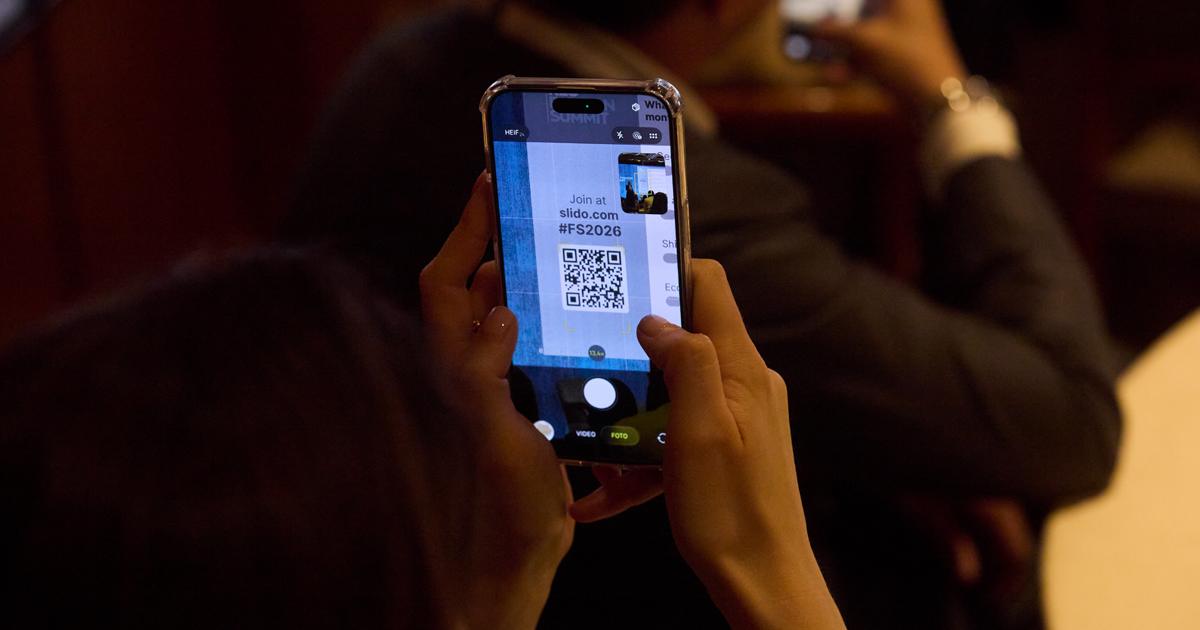
When senior luxury leaders and chief executives met at the 2026 RLC Fashion Summit in Milan on June 4, they shared a thoughtful optimism about the industry’s future. During the sessions, interviews, and networking, the audience participated in live polls to assess their current operational weaknesses alongside new business opportunities. The results from these votes go beyond typical market patterns, showing a detailed view of how the priorities for executives are changing.
The saturation problem
Somewhere between the volume targets and the quarterly reports, meaning became the thing fashion forgot to protect.
Start with multi-brand retail. Nearly half the room — 49% — said its primary value is discovery and curation. Community and experience, the answer the industry has leaned on for years to justify physical retail, came in at 23%. Independent editorial perspective registered 13%; cultural authority 11%; access to emerging consumers just 4%. The dominant answer is editorial. In a market saturated with product, the capacity to edit, to surface the unexpected, to make a selection coherent, is what commands attention. The executives are saying that meaning has become scarcer than merchandise.
Then look at what threatens long-term brand desirability. Losing emotional relevance with younger consumers came first, at 33%, followed by overexposure and over-distribution at 31%. Brands becoming culturally interchangeable registered 21%. Dependence on perpetual growth came in at 12%; leadership and creative instability, the story the trade press most readily reaches for, received just 2%. Overexposure and emotional irrelevance seem to be the same problem at different stages of its development. When a brand appears everywhere, the charge that justified its price begins to dissipate. Sixty-four percent of the room named some version of that dynamic as the primary threat to brand equity.
Asked which challenge the industry is least willing to confront, 41% said overproduction. Fashion still manufactures far beyond what the market demands. Consumers valuing emotion over status came second at 33%; fashion becoming too homogeneous registered 15%.
These three results describe an industry producing too much and distributing too widely, steadily losing the emotional charge that made its products worth wanting. The executives who voted on this understand the mechanism. The correction has not followed the diagnosis.
The new coordinates
Those contradictions don’t sit in a vacuum. The biggest pressures on fashion right now are political, not technological, and the markets the industry is watching have changed almost entirely.
When asked what will have the greatest impact on the fashion industry over the next 12 months, 43% selected geopolitical fragmentation and global instability. Shifting consumer values and identity came second at 35%. Artificial intelligence registered 12%. Economic uncertainty received 8%; regulation and trade policy 3%.
Fashion in 2026 has been publicly preoccupied with AI. The executives at the RLC Fashion Summit placed it well down the list of immediate concerns. The gap between geopolitics and AI is 31 percentage points. The people managing sourcing decisions across multiple continents and navigating tariff environments that shift with political cycles are communicating a clear priority: the pressure bearing down on the industry right now is structural and political. The industry’s public AI conversation has not caught up with that ordering.
The growth map confirms how thoroughly the coordinates have shifted. India led at 36%, the Middle East followed at 34%, Southeast Asia at 20%. Latin America and China each received 5%.
For a sector calibrated, for the better part of fifteen years, almost entirely around Chinese consumer growth, that number lands hard. It reflects post-pandemic shifts in Chinese consumer sentiment and a reassessment of concentration risk. But the more instructive reading sits in the near-parity between India and the Middle East — two markets with very different consumer profiles, retail infrastructures, and regulatory environments, yet accorded near-identical conviction by the room. Fashion is not converging on a single replacement for China. It is learning to operate across multiple, very different frontiers simultaneously.


What fashion is really betting on
The most honest signal in any industry is not what it says in public, but where it puts its money.
Asked where the most attractive investment opportunity in fashion lies right now, 26% named brand extensions into hospitality and lifestyle. Experiential retail and destinations registered 24%, tied with heritage brands with reinvention potential at 24%. Fashion-tech and AI infrastructure received 18%; emerging-market platforms just 8%.
For a room that has spent considerable energy discussing AI implications, the investment appetite points almost entirely elsewhere. The context for that comes from a separate question: what is fashion underestimating most about AI? 35% selected the shift in power toward platforms and data ecosystems. The impact on consumer discovery and the speed of disruption each came in at 20%. The transformation of creativity and design — the answer that dominates the public conversation — registered 15%.
The executives are not primarily worried about what AI does to designers. They are worried about what it does to the architecture of the market: who controls the discovery layer, who captures the margin as fashion consumption increasingly flows through platforms that fashion brands did not build. That shift is slower and quieter than the creative disruption narrative.
The investment choices reflect that concern. Experience, heritage, and brand depth, the categories that topped the investment poll, are the hardest to replicate and the most resistant to platform displacement. Whether that is a deliberate hedge or an instinctive one, the two answers land in the same place.
Not the whole story?
What makes the live poll results from the 2026 RLC Fashion Summit in Milan worth taking seriously is, above all, who was in the room. When the same questions are put to an audience of Chief Executives and senior luxury leaders, in real time, without time to craft a position, the answers carry a different weight than a survey or a panel discussion. These are the people making the decisions.
They are also a specific group. A room of CEOs reflects the priorities of established brands, proven models, existing power. The answers are high-level and worth taking seriously. They are not, however, the whole industry.
The room voted. The market will have its say.


