
Less is the new more.
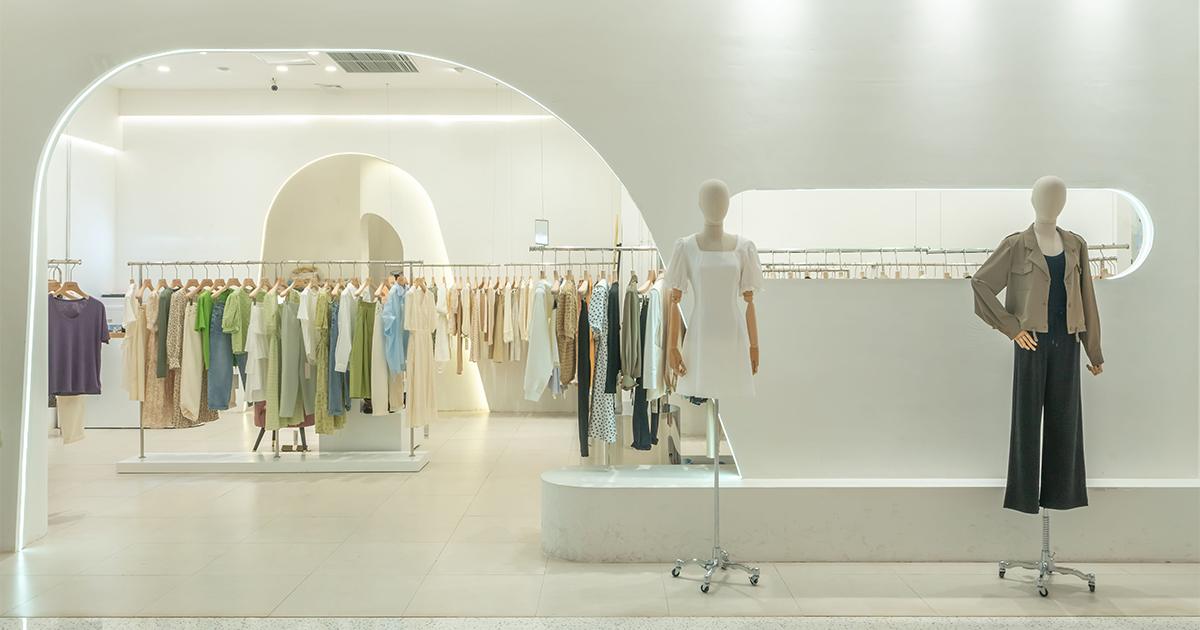
Gone are the days when department stores built empires by stacking products aisle upon aisle in massive locations. Welcome to the era of the small-format department stores; curated, convenient, compact, and communitycentric. Between 2024 and 2025, industry titans like Macy’s, Bloomingdale’s, Target, Nordstrom, and even Ikea have been formalizing what was once experimental: downsizing retail real estate to futureproof their relevance and profitability.
Why the “big-box” model is shrinking
After decades of unchallenged reign, the traditional department store is learning a hard truth: bigger is no longer better. Shoppers have migrated online, retail real estate costs have soared, and what once felt like a formula for success has begun to seem more like a burden.
According to the International Association of Department Stores (IADS), the trend of “betting on smaller spaces” is driven by ecommerce’s dominance and shrinking support for large logistics-heavy locations.
This concept isn’t entirely new. As far back as 2011, Walmart was testing its “Express” model, and both Target and Amazon have flirted with small-format retail in various ways over the years.
What has changed, however, more recently is consumer expectations. People now want to meet all their shopping needs closer to where they live and work. This mirrors a broader trend across sectors—particularly in office and multifamily real estate—where mixed-use, “live, work, and play” environments are becoming the norm.
For major retailers, capitalizing on this shift means reducing the friction of distance and embedding retail into the rhythm of daily life, cutting down on commute times and converting proximity into sales.
How retail giants are downsizing
The squeeze is felt across the aisle. Grocers like Whole Foods and Meijer have trimmed their footprint, launching smaller-format neighborhood stores that prioritize grab-and-go ease, localized assortments, and faster fulfillment. Christina Minardi, EVP, growth and development, Whole Foods Market and Amazon underscoring the retailer’s push: “In our new store formats, we are tailoring every square foot to the unique, fast-paced needs of urban lifestyles”.
Meanwhile, Target, despite shutting some underperforming locations, continues to refine and expand its urban concept, signaling that for major retailers, small-format department stores are synonymous with strategic realignment.
Then there’s IKEA, the Swedish behemoth once known for sprawling suburban complexes and flat-pack epics. In 2025, the company unveiled plans to open seven new small-format “Plan and Order Point” stores—compact hubs where customers can design kitchens, order furniture, and arrange delivery without wandering a maze of sofas.
“Our strategy continues to prioritize our customer’s needs, and in FY24, we continued to make everyday living more accessible, especially during a time when we know economic challenges are leading to a decrease in disposable income for many Americans,” explained Javier Quiñones, CEO and chief sustainability officer for IKEA U.S. referencing the rollout.
These efforts follow a strong performance year in the U.S., where IKEA reported $5.5 billion in total sales, including $1.9 billion from e-commerce, and grew its market share by 13.6% over the past five years. The message is clear: scaling down doesn’t mean slowing down.
Even across the Atlantic, the narrative holds. In 2024, Denmark’s Magasin du Nord introduced two compact-format department stores, showing that this isn’t just a North American curiosity but a truly global reimagining of scale, service, and space.
What makes this shift even more important? The economics:
- Lean operating costs: Smaller leases, reduced staffing needs, and lighter inventory burden.
- Rapid rollout: A 20,000 sq ft site easily fits into strip centers, minimizing build times and landlord friction.
- Omnichannel strength: These agile outlets double as neighborhood logistics hubs, seamlessly integrating pickup, returns, styling, and digital touchpoints.
The IADS Global Department Store Monitor (2023–2024) confirms these smaller footprints are deliberate moves to optimize formats, localize offerings, and diversify store models.
Is smaller the answer?
Not always.
In January 2025, Macy’s announced it would close four small-format stores alongside 62 full-size locations—a reminder that the downsizing strategy isn’t without complications. While the company initially pledged to open up to 30 new small-format stores by fall 2025, it’s now unclear whether that goal will be met. As of early this year, just over a dozen have opened.
The small-format stores—about a fifth the size of a traditional Macy’s—are designed to test untapped markets or replace underperforming locations. But the rollout appears uneven, and performance varies by region.
Two years ago, however, the executive suite was confident. “Our small-format strategy is one way we intend to harness the full power of the brand to deliver sustainable, profitable sales growth,” said COO Adrian Mitchell, while CEO Tony Spring called the broader reset a chance to “rechallenge the status quo” and “modernize Macy’s Inc.”
Meanwhile, Nordstrom has also recalibrated. One of its Nordstrom Local service hubs was recently closed and repurposed into a styling-focused storefront, suggesting a need to refine the small-format experience, not just expand it.
Compact but also complicated
The rise of small-format department stores is not a passing fad. Instead, it’s a full-blown rethink of retail real estate, strategy, and shopper experience. But if the last two years have taught us anything, it’s that going small doesn’t always mean getting it right.
Retailers like Macy’s, Nordstrom, Bloomingdale’s, and Magasin du Nord have made bold bets, closing hundreds of underperforming big-box stores while experimenting with scaled-down formats. Some have delivered promising results. Others have quietly been shuttered or repurposed.
That’s the paradox: small-format retail promises flexibility, agility, and local relevance, but its success hinges on execution, location, and alignment with changing consumer habits.
Still, for retailers and commercial real estate professionals the shift presents opportunity. With fewer square feet and more targeted layouts, retailers are rethinking how stores function, and CRE teams are helping match bold ideas with the right urban footprints.
So no, size isn’t the story. But neither is small a silver bullet. Maybe adaptability is the real formula for survival.


